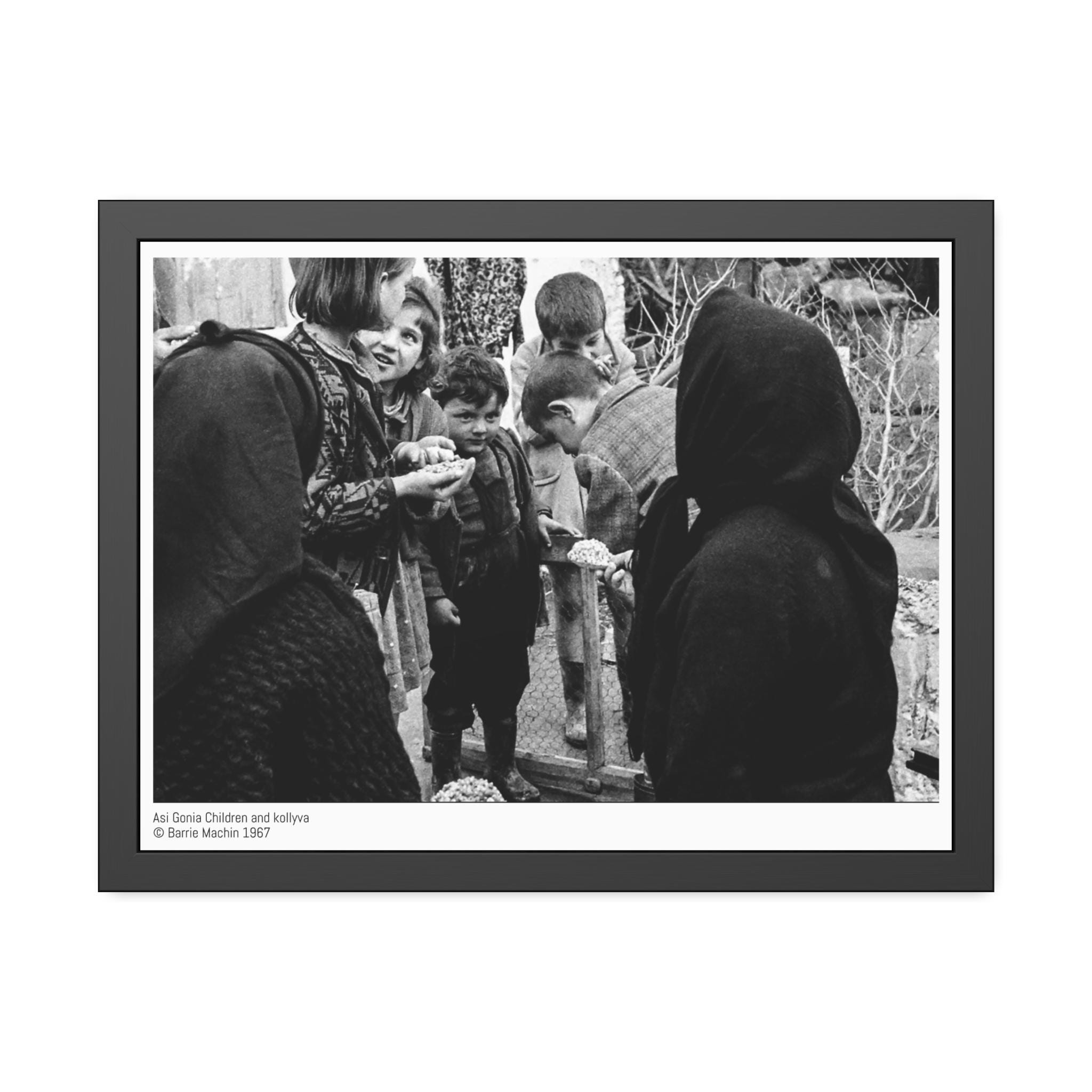
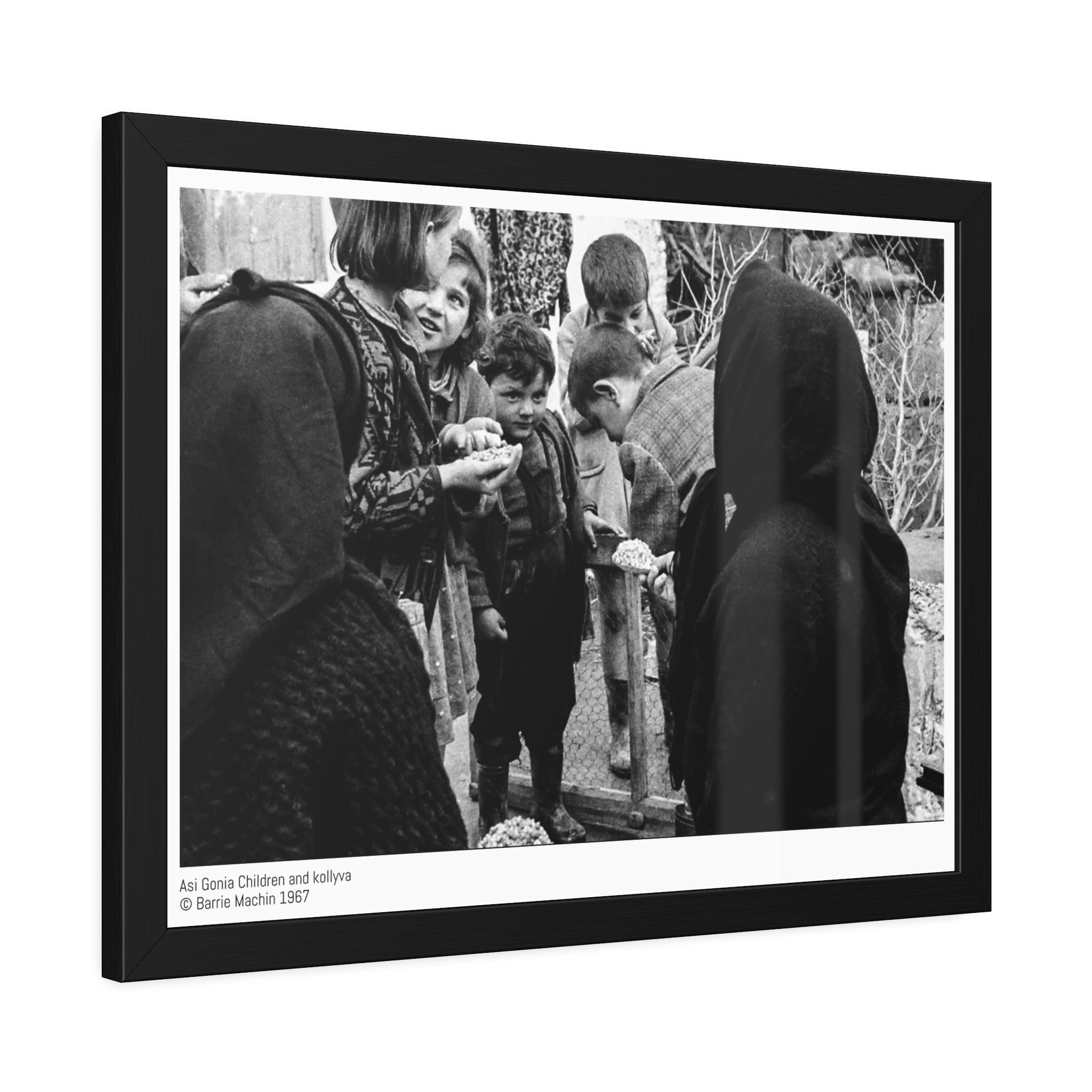
Asi Gonia Exhibition Children and kolyva
AU$ 143.10

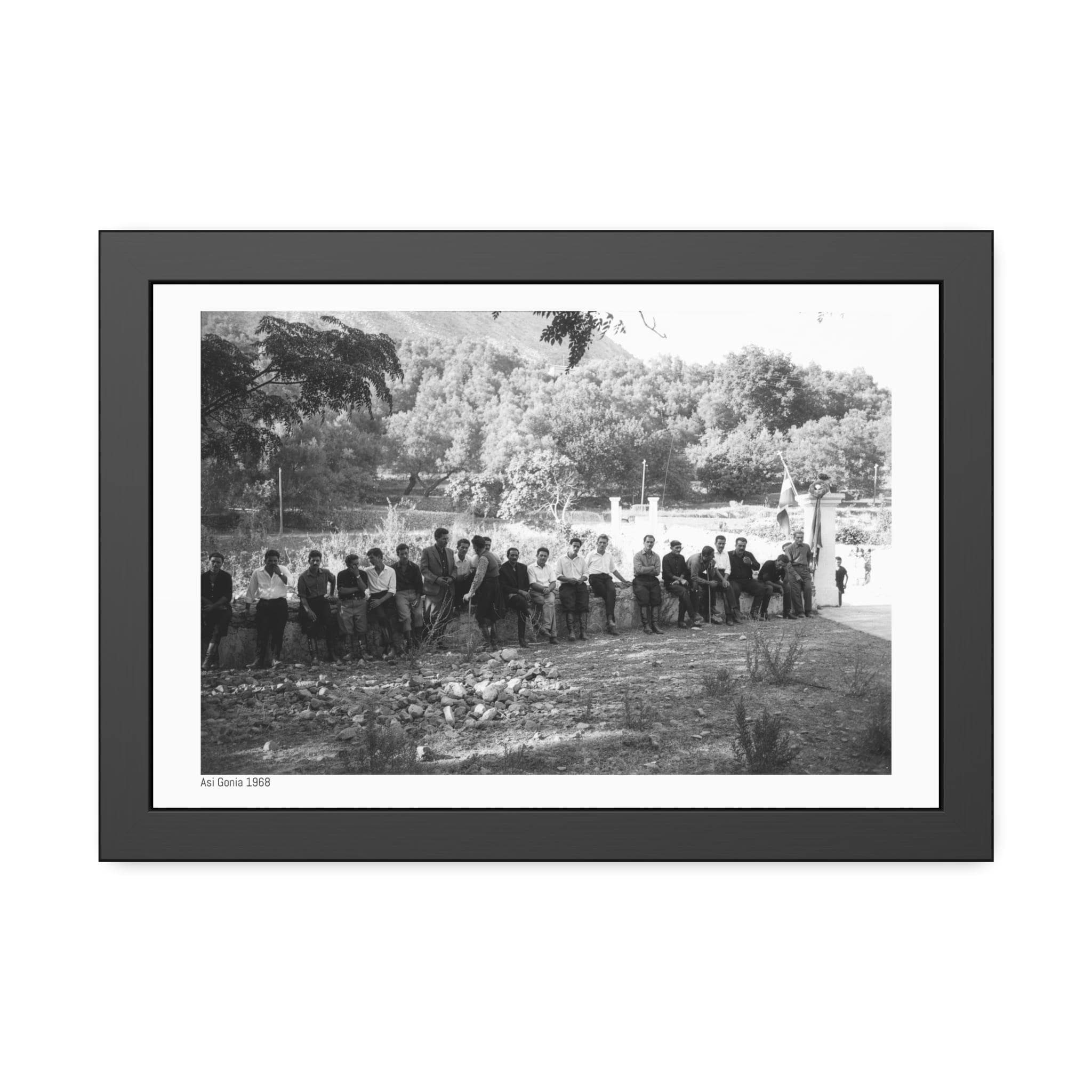
ASI GONIA: DEATH MEMORIAL DISTRIBUTION OF KOLYVA 1967
DescriptionThe breach in the family and community caused by death is healed over slowly. It may take up to six years for full incorporation into the supernatural world and the re-establishment of everyday life of the community: memorial services are held on the ninth and fortieth day after death (the seranta), at three monthly intervals (trimina, xamina, niamina), up to a year, and thereafter, if the family can afford them, on the second, fifth and tenth anniversaries of the death.A week before a memorial service women prepare large amounts of kolyva, boiling about eight okhades of wheatgerm with sweets and perfume, laying it out to dry on a tray. Decanted broth from the kolyva is drunk by the family and neighbours before it is distributed.George Psychoundakis describes the gathering:In the evening, women gather to decorate the boiled wheat. Two trays and a plate to go to the church. They decorate them with a layer of sugar, on which they trace a cross, branches and flowers, covered with ‘hundreds and thousands.’ Decorations vary with the season. In the cheese season, they fix a tray of cheese pasties. For old men, they fix kuluria like wedding cakes. They put water, wine and a small lamp on the tray of kolyva. The lamp burns at night so that the soul of the dead person can see the decorations. On the Sunday morning early a memorial service is held and the kolyva, kuluria (if available), rusks and wine are given away at the church. Later close kinswomen take baskets of kolyva around the village. Sometimes they give gifts of clothes and food to a poor home. It used to be a custom to give bread and wine to a poor family for forty days after the death, and the priest used to be paid in olives for his services (1962: 107). See my book on Amazon.A framed paper poster that brings quiet, documentary-style moments into your space. The matte black pinewood frame and shatter-proof plexiglass give the image a gallery-ready presence while the choice of fine art or semi-gloss paper lets you choose texture — a painterly, tactile feel or a bright, satin photo finish. Pre-installed hanging hardware and rubber bumpers make installation simple and keep the frame sitting straight and gentle against the wall. Ten sizes and both horizontal and vertical layouts let you place this piece on a narrow hallway, a living room gallery wall, or above a desk. Assembled in the USA from responsibly sourced parts, this framed print emphasizes craftsmanship and thoughtful presentation.Product features - Choice of two papers: fine art (310 gsm) or semi-gloss (260 gsm) for texture or brightness - 100% real pinewood frame with matte black finish and brown paper backing - Shatter-proof plexiglass cover to protect the print - Pre-installed hanging hardware plus rubber bumpers for easy, level mounting - Available in 10 sizes and both horizontal and vertical orientations; assembled in the USACare instructions - Clean framed prints with a slightly wet cloth when necessary.
DescriptionThe breach in the family and community caused by death is healed over slowly. It may take up to six years for full incorporation into the supernatural world and the re-establishment of everyday life of the community: memorial services are held on the ninth and fortieth day after death (the seranta), at three monthly intervals (trimina, xamina, niamina), up to a year, and thereafter, if the family can afford them, on the second, fifth and tenth anniversaries of the death.A week before a memorial service women prepare large amounts of kolyva, boiling about eight okhades of wheatgerm with sweets and perfume, laying it out to dry on a tray. Decanted broth from the kolyva is drunk by the family and neighbours before it is distributed.George Psychoundakis describes the gathering:In the evening, women gather to decorate the boiled wheat. Two trays and a plate to go to the church. They decorate them with a layer of sugar, on which they trace a cross, branches and flowers, covered with ‘hundreds and thousands.’ Decorations vary with the season. In the cheese season, they fix a tray of cheese pasties. For old men, they fix kuluria like wedding cakes. They put water, wine and a small lamp on the tray of kolyva. The lamp burns at night so that the soul of the dead person can see the decorations. On the Sunday morning early a memorial service is held and the kolyva, kuluria (if available), rusks and wine are given away at the church. Later close kinswomen take baskets of kolyva around the village. Sometimes they give gifts of clothes and food to a poor home. It used to be a custom to give bread and wine to a poor family for forty days after the death, and the priest used to be paid in olives for his services (1962: 107). See my book on Amazon.A framed paper poster that brings quiet, documentary-style moments into your space. The matte black pinewood frame and shatter-proof plexiglass give the image a gallery-ready presence while the choice of fine art or semi-gloss paper lets you choose texture — a painterly, tactile feel or a bright, satin photo finish. Pre-installed hanging hardware and rubber bumpers make installation simple and keep the frame sitting straight and gentle against the wall. Ten sizes and both horizontal and vertical layouts let you place this piece on a narrow hallway, a living room gallery wall, or above a desk. Assembled in the USA from responsibly sourced parts, this framed print emphasizes craftsmanship and thoughtful presentation.Product features - Choice of two papers: fine art (310 gsm) or semi-gloss (260 gsm) for texture or brightness - 100% real pinewood frame with matte black finish and brown paper backing - Shatter-proof plexiglass cover to protect the print - Pre-installed hanging hardware plus rubber bumpers for easy, level mounting - Available in 10 sizes and both horizontal and vertical orientations; assembled in the USACare instructions - Clean framed prints with a slightly wet cloth when necessary.