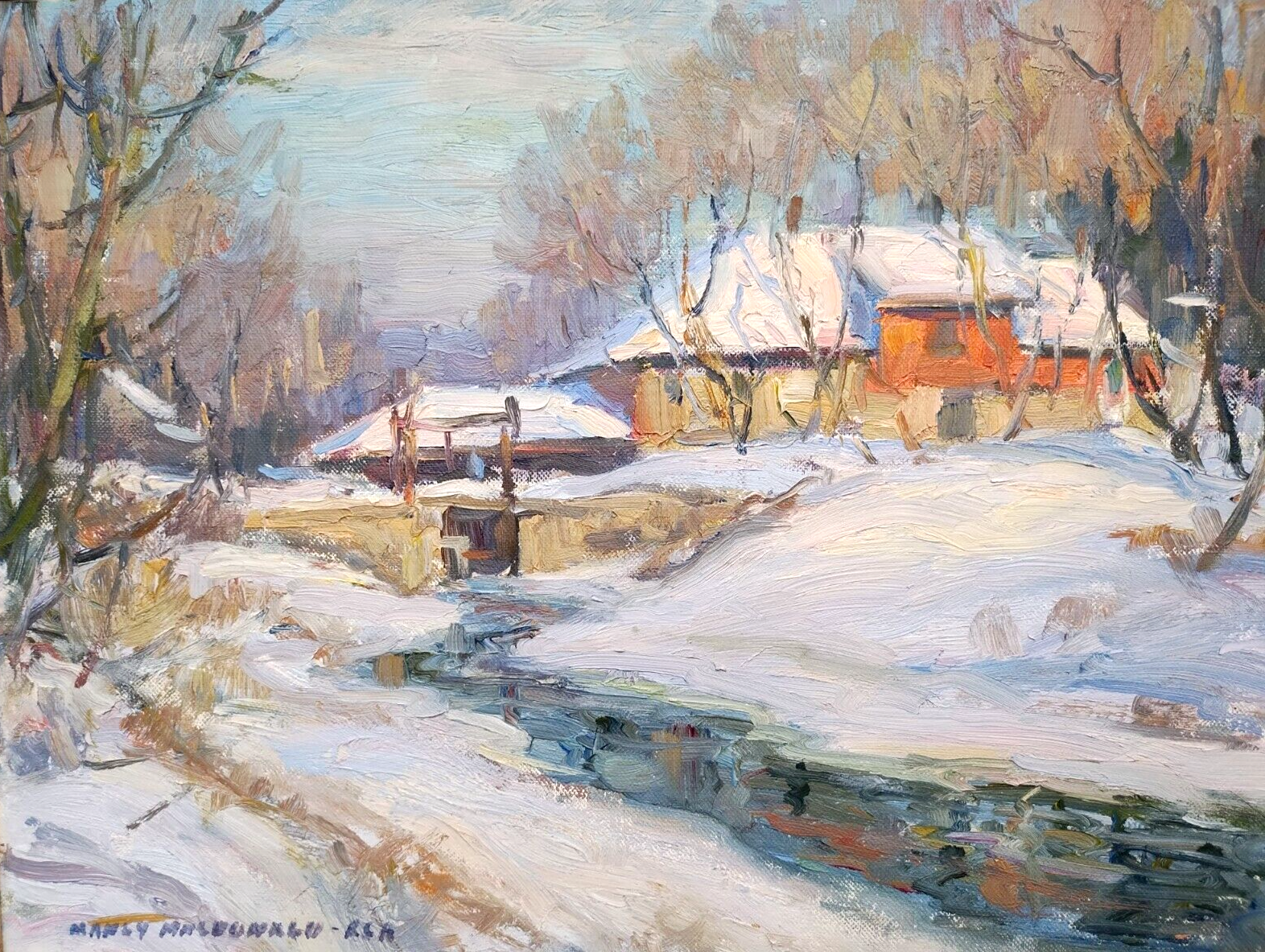
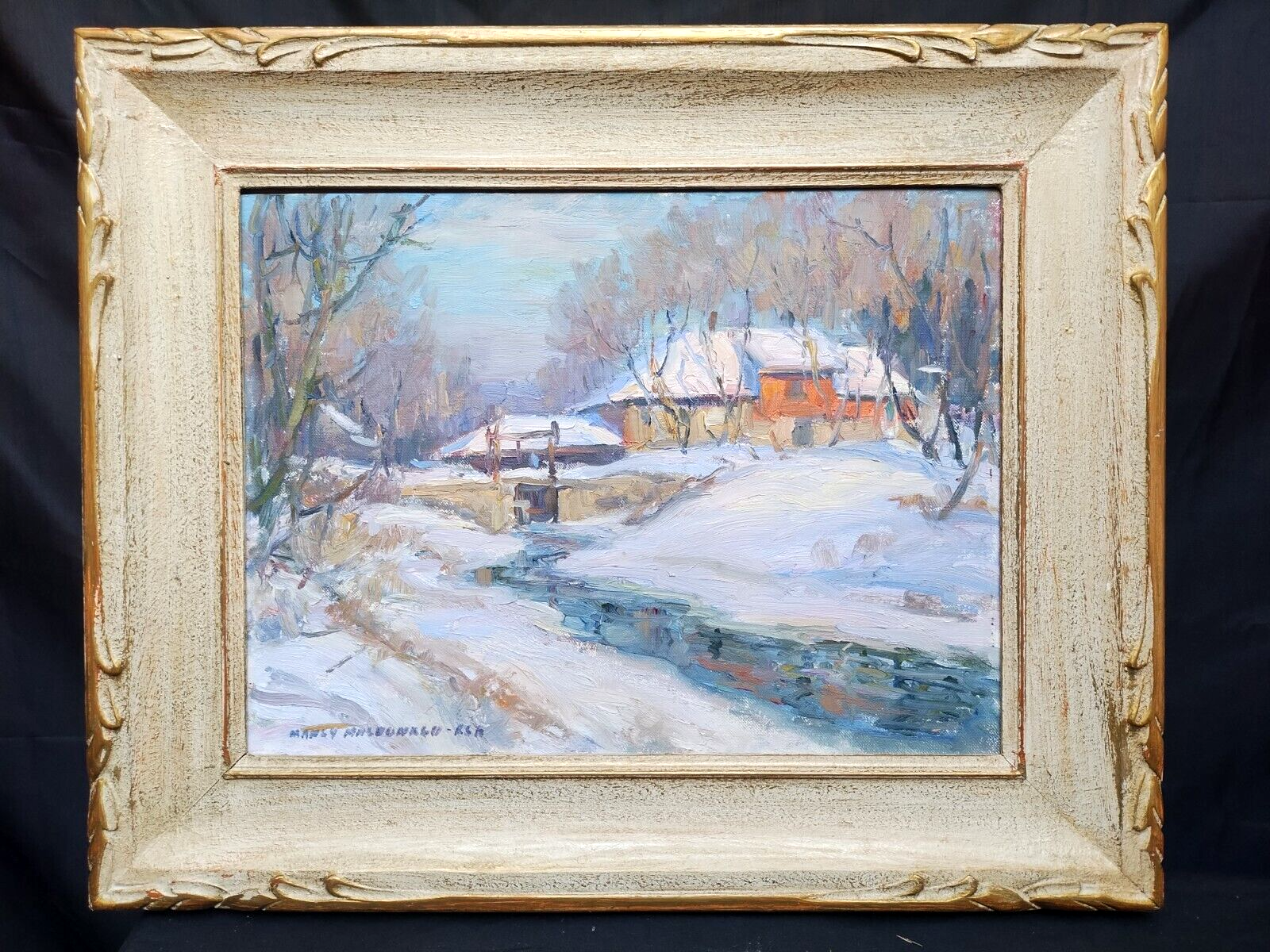

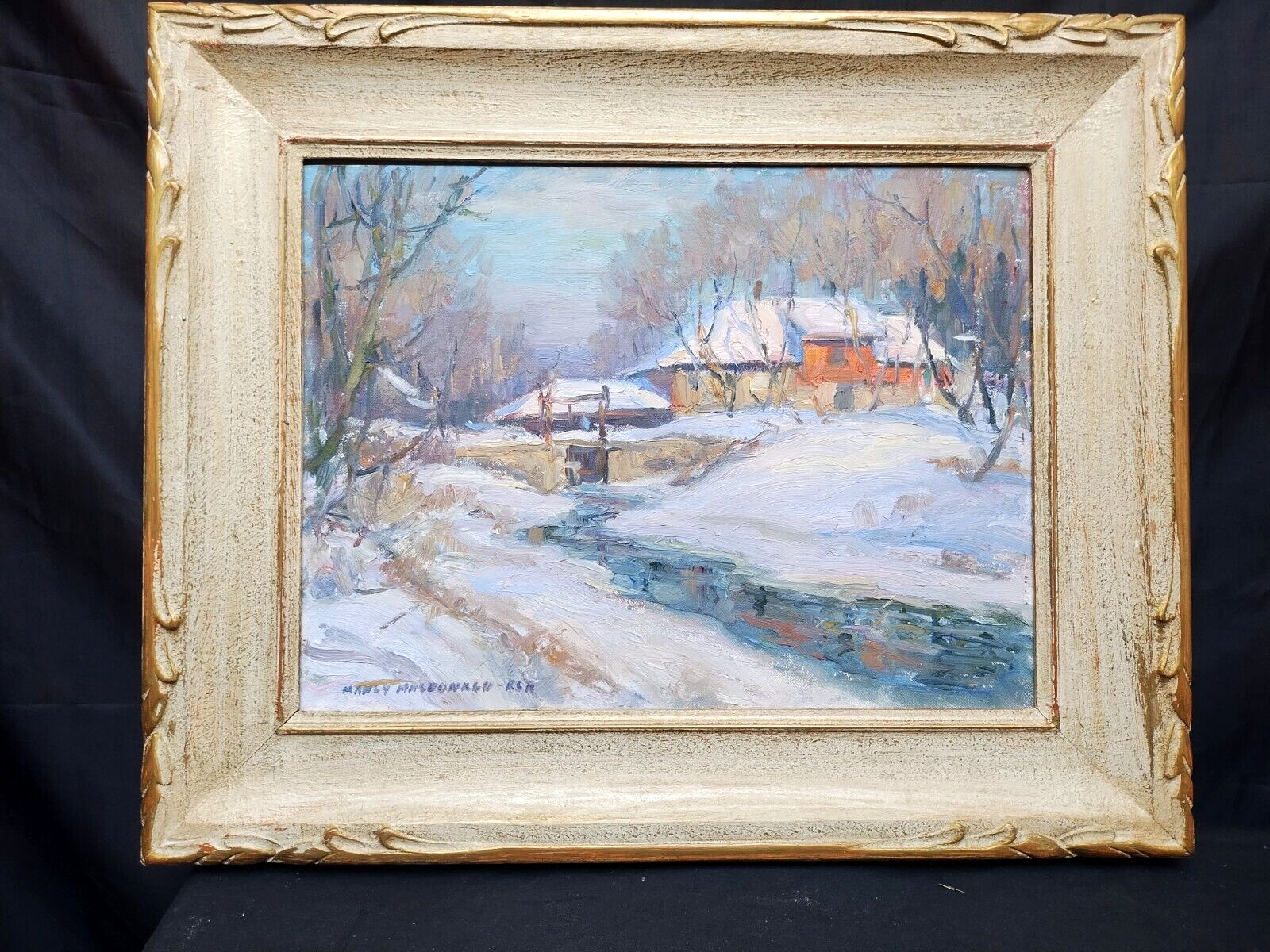
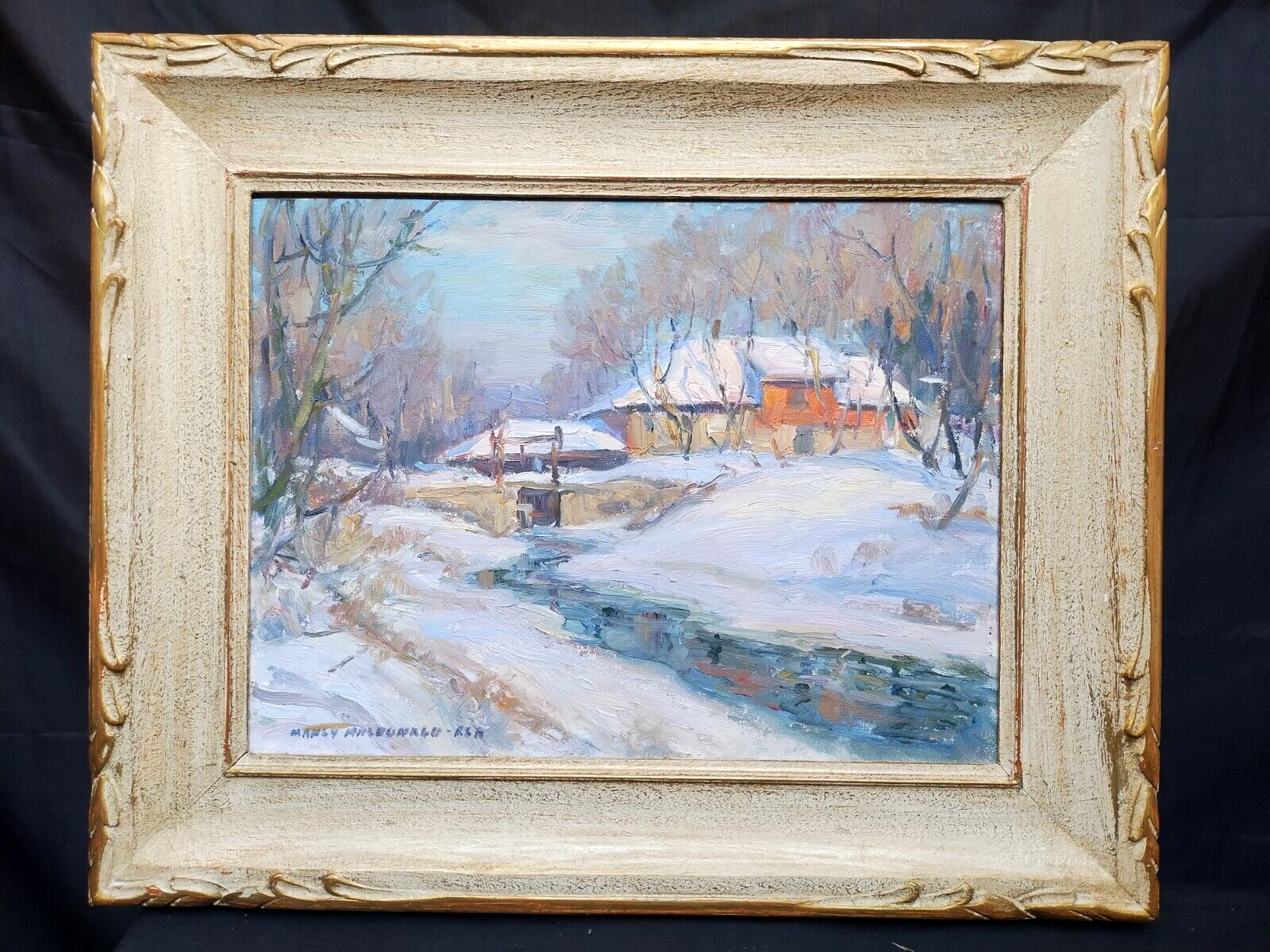
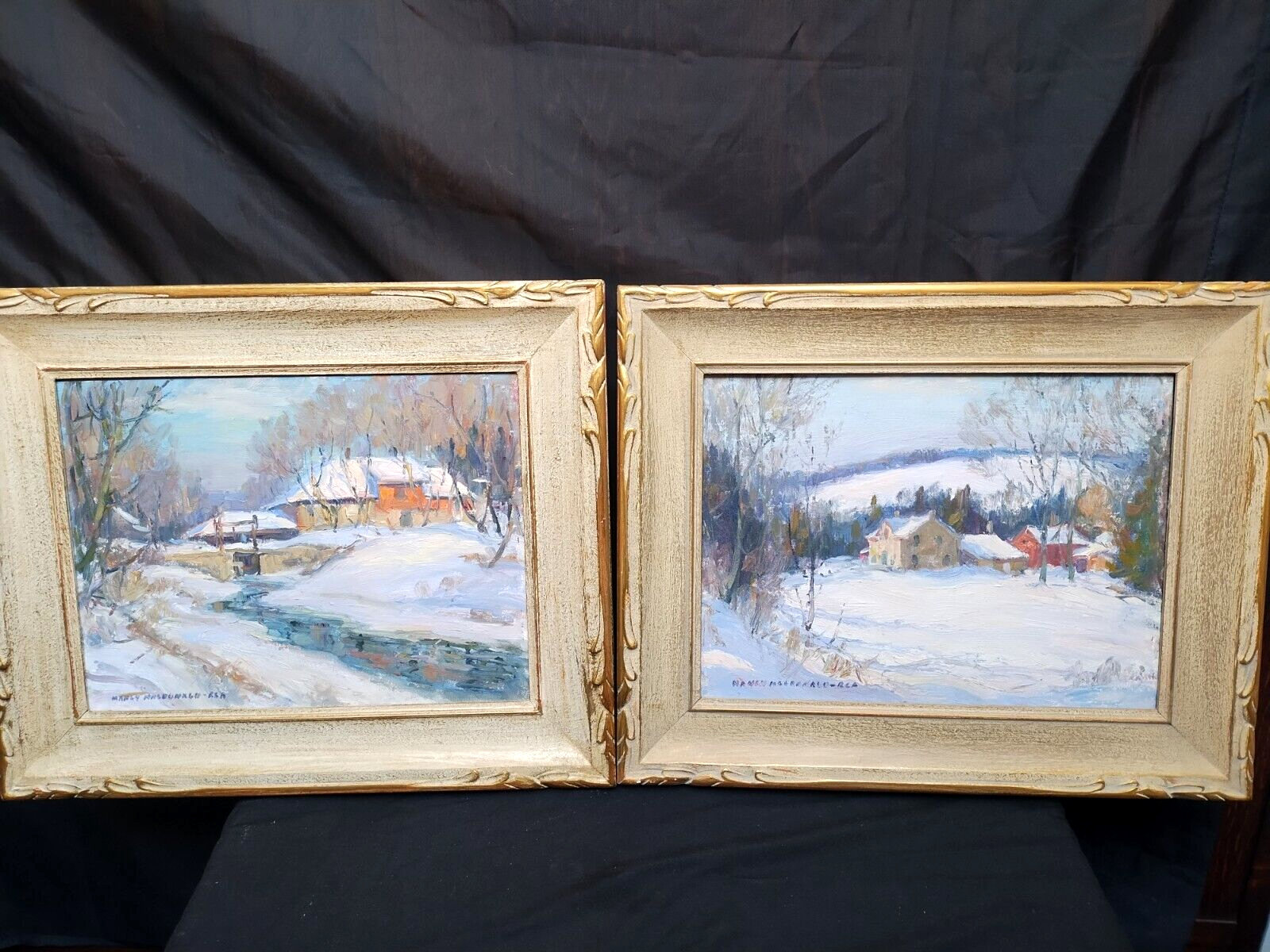
Manly MacDonald Signed Red Mill Winter Landscape 12x16 Oil Painting CA MA 1 of 2
$ 2950.00


Up for consideration is 1 of 2 paintings done by well listed Massachusetts and
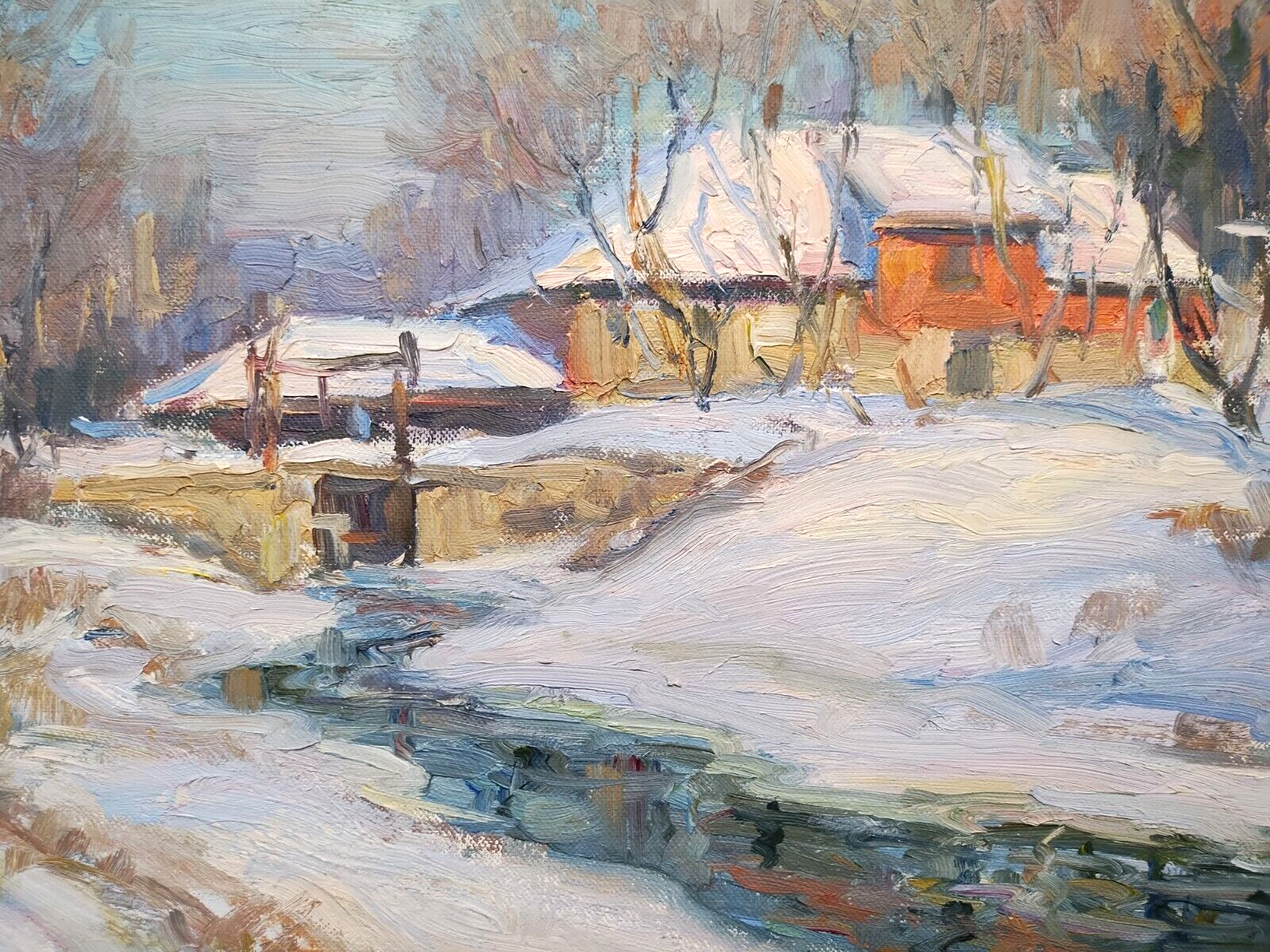
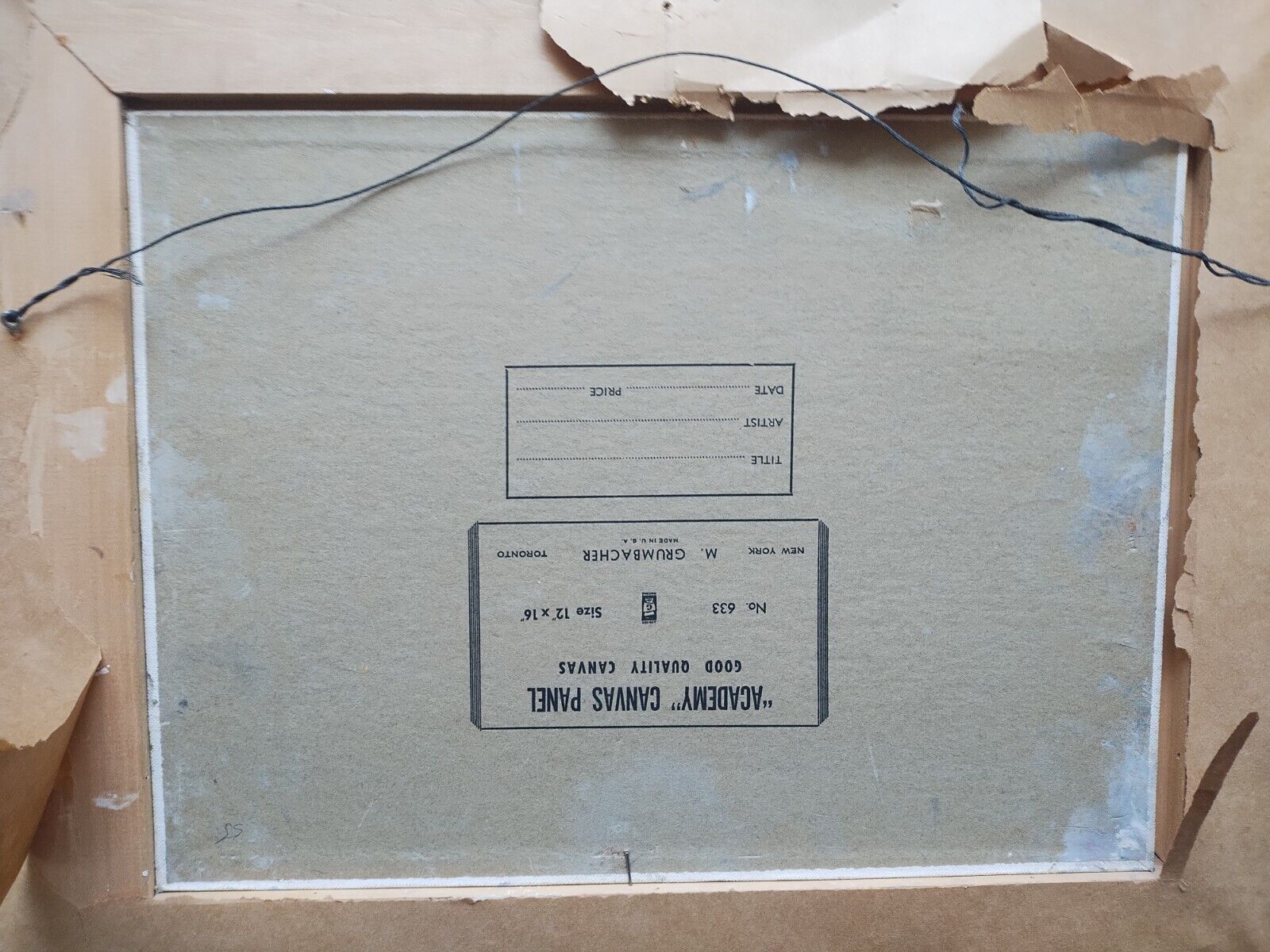
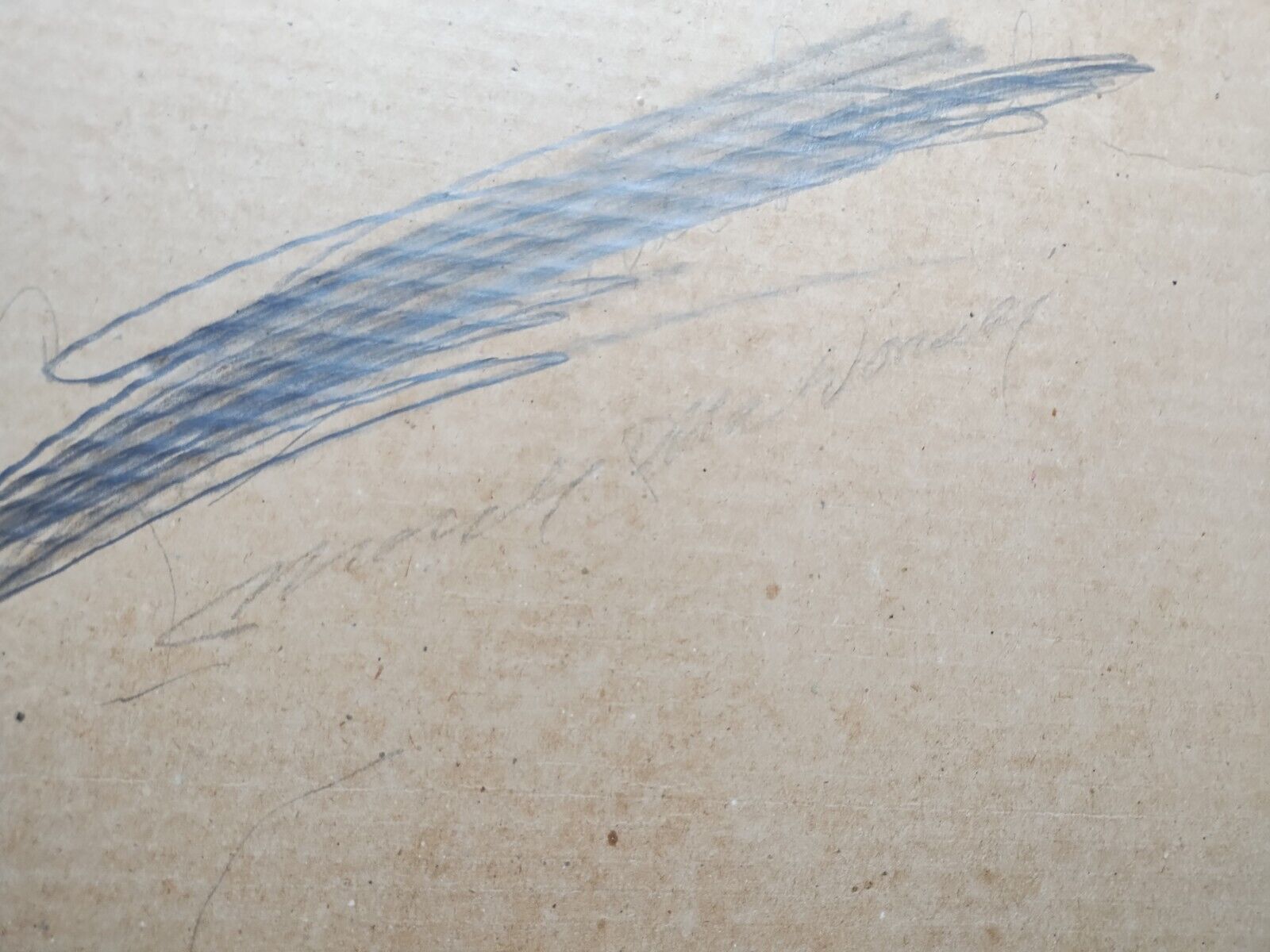
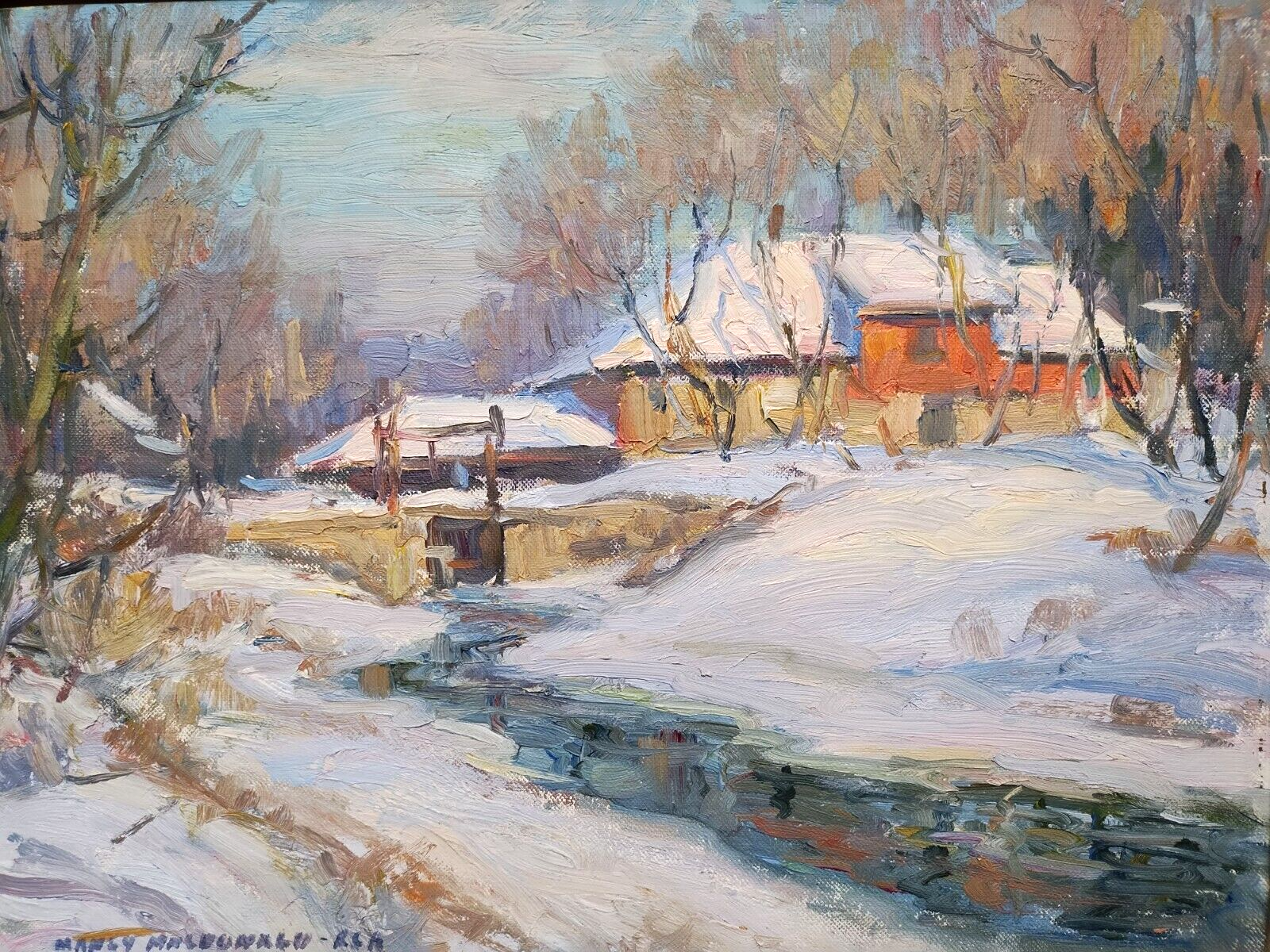
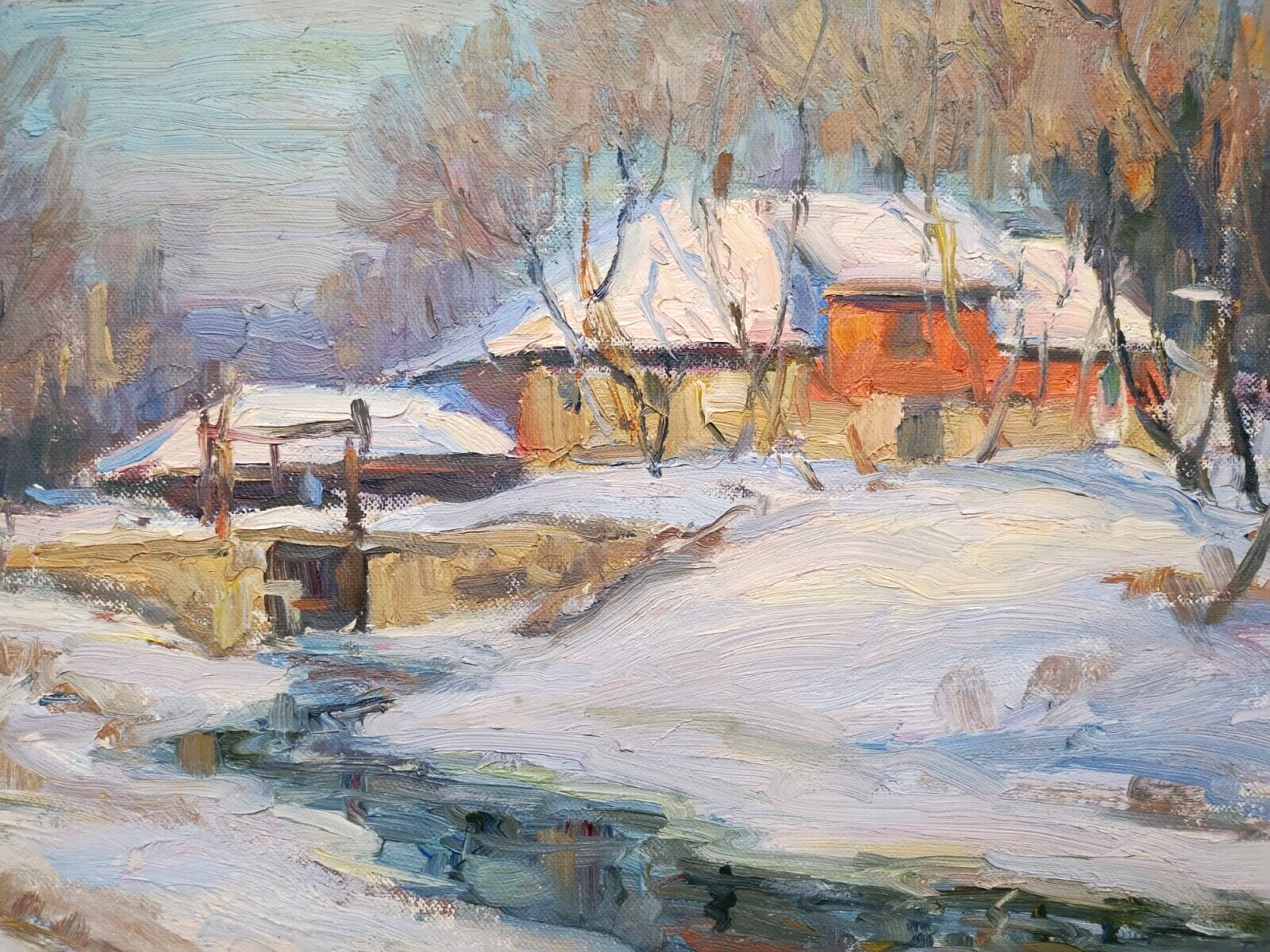
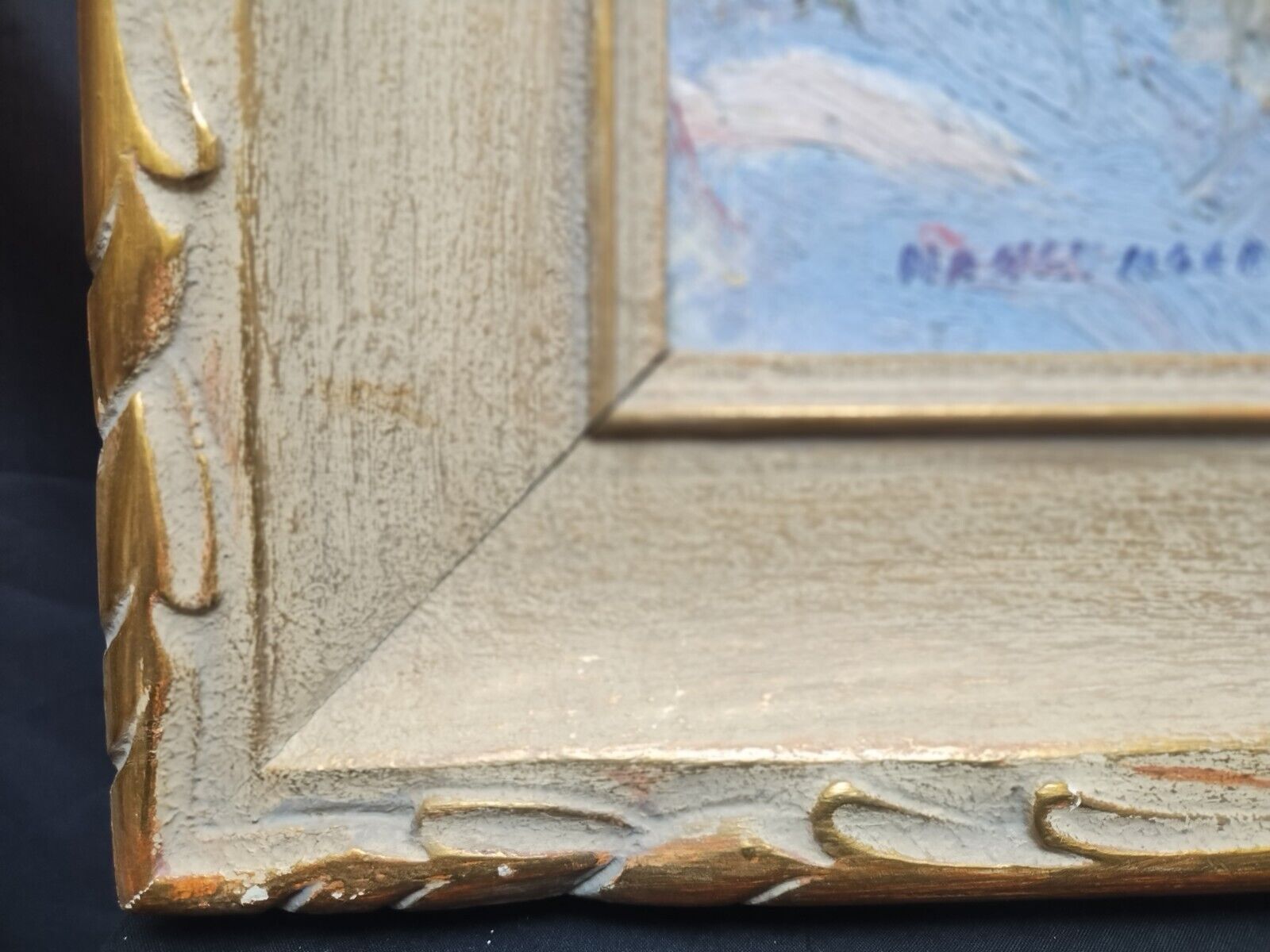
Ontario Canada artist Manly Edward MacDonald(1889-1971). This painting measures 12 by 16 inches with overall dimensions including the frame being 18 by 22 inches. The painting is done on Artists Academy board and is marked 55 or 56 on the back possibly for the year or artist inventory number. There is a cardboard spacer protective piece on the back with the artists name and some penciled out information possibly a title dedication or framers information... The painting was purchased with a matching framed winter landscape by the same artist which is shown but sold separately. He has skillfully mastered the "Plein Air" style or technique with this work of Art. It is spot on when viewed from the correct distance. If you have any questions or something to share please message me. Combined shipping with the other painting at no additional cost. Best Regards, JohnnyJohnnyCrystal Est. 1987 Biography:Manly Edward MacDonald RCA, OIP (1889 - 1971)Manly MacDonald was a well-known Canadian painter, printmaker and educator.He was born in Point Anne, Ontario, a town about 150 miles east of Toronto, Ontario, and died in Toronto, where he had lived since the early 1920s. (1)His primary medium was oil paint; however, he also worked in pastel, watercolor, etching
•, drypoint
•, aquatint
• and mixed mediums. His subjects included portraits, figures, landscapes, winter scenes, cityscapes, village scenes, farm activity, lakes, rivers, boats and genre
•. His styles were Realism
• and Plein Air
•. His favorite painting location was the countryside around the Bay of Quinte on the north shore of Lake Ontario, near where he was born. (2)MacDonald's formal art education includes the Albright Art School, Buffalo, New York [Aka: Buffalo Fine Arts Academy] (1910) (3); the Boston Museum of Fine Arts School, Massachusetts (1912 - 1913) under William Paxton (3) and Philip Hale; and the Ontario College of Art, Toronto (1914 - 1916) under John W. Beatty and George A. Reid. MacDonald also taught at the Ontario College of Art from 1946 to the mid 1960s. (4)He was a member of the Royal Canadian Academy of Arts
• (Associate - 1919, Academician - 1948); the Ontario Society of Artists
• (1919 - 1951), though he later resigned in protest over the Society's emphasis on "modernism"; and he was a founding member of the Ontario Institute of Painters
• (1958). (5)In addition to exhibiting with the above organizations, he exhibited with the Boston Arts Club in 1926 and the Art Association of Montreal (now the Montreal Museum of Fine Arts) in 1938. His paintings were also included in the 1924 and 1925 British Empire Exhibitions at Wembley, London, England; the 1939 New York World's Fair; the 1952 Colombo Plan Exhibition, Ceylon [now Sri Lanka]; the 1953 New Delhi International, India; and the 1959 Museum London, Ontario exhibition, which included the Painters Eleven, titled "Points of View". (6)Posthumously, his paintings were included in "Canvas of War: Painting the Canadian Experience, 1914 to 1945", at the Art Gallery of Ontario in 2001.MacDonald's works are avidly collected in Canada; and they are in several public collections. According to the Canadian Heritage Information Network
• there are 41 of his paintings and drawings in the permanent collections of museums in Canada. They include: the Tom Thomson Memorial Art Gallery (Owen Sound, Ontario), The Market Gallery (Toronto), Museum London (Ontario), McMichael Canadian Art Collection (Kleinburg, Ontario), Art Gallery of Ontario (Toronto), Art Gallery of Greater Victoria (B.C.), and the National Gallery of Canada (Ottawa).The Canadian War Museum, Ottawa has the largest collection with 28 MacDonald paintings in its permanent collection (included in the previous total). "In September 1918, Eric Brown, the director of the National Gallery of Canada, commissioned MacDonald to paint scenes of women working on the land during the war. At the time, Brown was encouraging a number of artists to paint Canadian home front subjects as these had not been dealt with by the Canadian War Memorials Fund commissions operating in England." These paintings are now housed in the CWM. (7)MacDonald's awards include a Royal Canadian Academy of Art Travelling Scholarship won in 1918 and used in 1920 to travel through France, Spain and Italy. (8) Footnotes:(1) Sources: A Dictionary of Canadian Artists (1974), by Colin S. MacDonald (see AskART book references); and the National Gallery of Canada Artists Page - http://cybermuse.gallery.ca/cybermuse/search/artist_e.jsp?iartistid=3429.Note: The 1926 OSA exhibition catalogue lists his address as The Studio Building
•, however his stay must have been short as previous and subsequent catalogues do not. Source: Centre for Contemporary Canadian Art
• -http://ccca.finearts.yorku.ca/OSA/search_detail.html?artist=manly+macdonald&qtitle=&qdate=&keyfield=search.(2) Sources: AskART Images; and museum illustrations and descriptions of mediums in the Canadian Heritage Information Network
• data base and the Canadian War Museum.(3) All artist teachers, and artist associates mentioned in this biography have their own pages in AskART.(4) Source: A Dictionary of Canadian Artists (1974), by Colin S. MacDonald; and Manly E. MacDonald - Interpreter of Old Ontario (2010), by Charles Beale (see AskART book references).Note: Some respected sources say MacDonald attended the Ontario School of Art before the American schools, one as early as 1908; however J.W. Beatty did not start teaching at the school until 1912.Note: A Dictionary of Canadian Artists (1974), by Colin S. MacDonald says Manly MacDonald studied under Ernest Fosbery at the Albright Art School; however, according to the information form dated March 1913 and deposited by Fosbery with the National Gallery of Canada, Fosbery taught at the Art Student's League of Buffalo and at the Arts Guild of Buffalo, and no mention is made of the Albright Art School. Source: NGC 1913 http://cybermuse.gallery.ca/cybermuse/servlet/imageserver?src=DO9128&ext=x.pdf.(5) Sources: Art Gallery of Ontario: the Canadian Collection (1970), by Helen Pepall Bradfield; and Manly E. MacDonald Interpreter of Old Ontario (2010), by Charles Beale (see AskART book references).Note: Kenneth Forbes and Archibald Barnes, both future members of the Ontario Institute of Painters, also resigned from the OSA in 1951 for the same reason.(6) Exhibition Sources: A Dictionary of Canadian Artists (1974), by Colin S. MacDonald; The Collector's Dictionary of Canadian Artists at Auction (2001), by Anthony R. Westbridge and Diana L. Bodnar; The National Gallery of Canada: Catalogue of Paintings and Sculpture, Volume III (1960), by R.H. Hubbard; Art and Architecture in Canada (1991), by Loren R. Lerner and Mary F. Williamson (see books in AskART book references); and the Art Gallery of Ontario's archived catalogue summaries (online).Note: Perhaps Ontario Institute of Painter's most famous exhibition was "Points of View", at which 10 of its member's works were hung with those of the abstractionist group Painters Eleven
• and the works of figurative abstractionists like York Wilson. The point of the show was to illustrate the conservative (OIP), experimental (P11) and intermediate (Wilson and Company) trends in Canadian painting .(7) Source: Canadian War Museum.Note: A September 16, 2010 article in Watershed Magazine by Janet Davies cites two more museums with larger MacDonald collections than the CWM; however they are not listed with the Canadian Heritage Information Network and thus the counts cannot be easily verified. Their names are The Art Gallery of Northumberland, Cobourg, Ontario (37) and the John M. Parrott Art Gallery, Belleville, Ontario (over 100). Source: Janet Davies - http://watershedmagazine.com/?p=4. Note: In 1959, MacDonald was commissioned by the city of Toronto to paint a picture of the city's waterfront, which was given as a gift to Queen Elizabeth II; though it isn't listed on the Royal Collection website; it was recently located through inquiries to Queen Elizabeth II and photographed for the book Manly E. MacDonald - Interpreter of Old Ontario (2010), by Charles Beale (see AskART book references). Source: Charles Beale http://www.charlesbeale.ca/manlymacdonald/.(8) Source: Passionate Spirits: A History of the Royal Canadian Academy of Arts, 1880 - 1980 (1980) by Rebecca Sisler (see AskART book references).
• For more in-depth information about these terms and others, see AskART.com Glossary http://www.askart.com/AskART/lists/Art_Definition.aspx.Prepared and contributed to askART by M.D. Silverbrooke. Best Regards,Johnny
Ontario Canada artist Manly Edward MacDonald(1889-1971). This painting measures 12 by 16 inches with overall dimensions including the frame being 18 by 22 inches. The painting is done on Artists Academy board and is marked 55 or 56 on the back possibly for the year or artist inventory number. There is a cardboard spacer protective piece on the back with the artists name and some penciled out information possibly a title dedication or framers information... The painting was purchased with a matching framed winter landscape by the same artist which is shown but sold separately. He has skillfully mastered the "Plein Air" style or technique with this work of Art. It is spot on when viewed from the correct distance. If you have any questions or something to share please message me. Combined shipping with the other painting at no additional cost. Best Regards, JohnnyJohnnyCrystal Est. 1987 Biography:Manly Edward MacDonald RCA, OIP (1889 - 1971)Manly MacDonald was a well-known Canadian painter, printmaker and educator.He was born in Point Anne, Ontario, a town about 150 miles east of Toronto, Ontario, and died in Toronto, where he had lived since the early 1920s. (1)His primary medium was oil paint; however, he also worked in pastel, watercolor, etching
•, drypoint
•, aquatint
• and mixed mediums. His subjects included portraits, figures, landscapes, winter scenes, cityscapes, village scenes, farm activity, lakes, rivers, boats and genre
•. His styles were Realism
• and Plein Air
•. His favorite painting location was the countryside around the Bay of Quinte on the north shore of Lake Ontario, near where he was born. (2)MacDonald's formal art education includes the Albright Art School, Buffalo, New York [Aka: Buffalo Fine Arts Academy] (1910) (3); the Boston Museum of Fine Arts School, Massachusetts (1912 - 1913) under William Paxton (3) and Philip Hale; and the Ontario College of Art, Toronto (1914 - 1916) under John W. Beatty and George A. Reid. MacDonald also taught at the Ontario College of Art from 1946 to the mid 1960s. (4)He was a member of the Royal Canadian Academy of Arts
• (Associate - 1919, Academician - 1948); the Ontario Society of Artists
• (1919 - 1951), though he later resigned in protest over the Society's emphasis on "modernism"; and he was a founding member of the Ontario Institute of Painters
• (1958). (5)In addition to exhibiting with the above organizations, he exhibited with the Boston Arts Club in 1926 and the Art Association of Montreal (now the Montreal Museum of Fine Arts) in 1938. His paintings were also included in the 1924 and 1925 British Empire Exhibitions at Wembley, London, England; the 1939 New York World's Fair; the 1952 Colombo Plan Exhibition, Ceylon [now Sri Lanka]; the 1953 New Delhi International, India; and the 1959 Museum London, Ontario exhibition, which included the Painters Eleven, titled "Points of View". (6)Posthumously, his paintings were included in "Canvas of War: Painting the Canadian Experience, 1914 to 1945", at the Art Gallery of Ontario in 2001.MacDonald's works are avidly collected in Canada; and they are in several public collections. According to the Canadian Heritage Information Network
• there are 41 of his paintings and drawings in the permanent collections of museums in Canada. They include: the Tom Thomson Memorial Art Gallery (Owen Sound, Ontario), The Market Gallery (Toronto), Museum London (Ontario), McMichael Canadian Art Collection (Kleinburg, Ontario), Art Gallery of Ontario (Toronto), Art Gallery of Greater Victoria (B.C.), and the National Gallery of Canada (Ottawa).The Canadian War Museum, Ottawa has the largest collection with 28 MacDonald paintings in its permanent collection (included in the previous total). "In September 1918, Eric Brown, the director of the National Gallery of Canada, commissioned MacDonald to paint scenes of women working on the land during the war. At the time, Brown was encouraging a number of artists to paint Canadian home front subjects as these had not been dealt with by the Canadian War Memorials Fund commissions operating in England." These paintings are now housed in the CWM. (7)MacDonald's awards include a Royal Canadian Academy of Art Travelling Scholarship won in 1918 and used in 1920 to travel through France, Spain and Italy. (8) Footnotes:(1) Sources: A Dictionary of Canadian Artists (1974), by Colin S. MacDonald (see AskART book references); and the National Gallery of Canada Artists Page - http://cybermuse.gallery.ca/cybermuse/search/artist_e.jsp?iartistid=3429.Note: The 1926 OSA exhibition catalogue lists his address as The Studio Building
•, however his stay must have been short as previous and subsequent catalogues do not. Source: Centre for Contemporary Canadian Art
• -http://ccca.finearts.yorku.ca/OSA/search_detail.html?artist=manly+macdonald&qtitle=&qdate=&keyfield=search.(2) Sources: AskART Images; and museum illustrations and descriptions of mediums in the Canadian Heritage Information Network
• data base and the Canadian War Museum.(3) All artist teachers, and artist associates mentioned in this biography have their own pages in AskART.(4) Source: A Dictionary of Canadian Artists (1974), by Colin S. MacDonald; and Manly E. MacDonald - Interpreter of Old Ontario (2010), by Charles Beale (see AskART book references).Note: Some respected sources say MacDonald attended the Ontario School of Art before the American schools, one as early as 1908; however J.W. Beatty did not start teaching at the school until 1912.Note: A Dictionary of Canadian Artists (1974), by Colin S. MacDonald says Manly MacDonald studied under Ernest Fosbery at the Albright Art School; however, according to the information form dated March 1913 and deposited by Fosbery with the National Gallery of Canada, Fosbery taught at the Art Student's League of Buffalo and at the Arts Guild of Buffalo, and no mention is made of the Albright Art School. Source: NGC 1913 http://cybermuse.gallery.ca/cybermuse/servlet/imageserver?src=DO9128&ext=x.pdf.(5) Sources: Art Gallery of Ontario: the Canadian Collection (1970), by Helen Pepall Bradfield; and Manly E. MacDonald Interpreter of Old Ontario (2010), by Charles Beale (see AskART book references).Note: Kenneth Forbes and Archibald Barnes, both future members of the Ontario Institute of Painters, also resigned from the OSA in 1951 for the same reason.(6) Exhibition Sources: A Dictionary of Canadian Artists (1974), by Colin S. MacDonald; The Collector's Dictionary of Canadian Artists at Auction (2001), by Anthony R. Westbridge and Diana L. Bodnar; The National Gallery of Canada: Catalogue of Paintings and Sculpture, Volume III (1960), by R.H. Hubbard; Art and Architecture in Canada (1991), by Loren R. Lerner and Mary F. Williamson (see books in AskART book references); and the Art Gallery of Ontario's archived catalogue summaries (online).Note: Perhaps Ontario Institute of Painter's most famous exhibition was "Points of View", at which 10 of its member's works were hung with those of the abstractionist group Painters Eleven
• and the works of figurative abstractionists like York Wilson. The point of the show was to illustrate the conservative (OIP), experimental (P11) and intermediate (Wilson and Company) trends in Canadian painting .(7) Source: Canadian War Museum.Note: A September 16, 2010 article in Watershed Magazine by Janet Davies cites two more museums with larger MacDonald collections than the CWM; however they are not listed with the Canadian Heritage Information Network and thus the counts cannot be easily verified. Their names are The Art Gallery of Northumberland, Cobourg, Ontario (37) and the John M. Parrott Art Gallery, Belleville, Ontario (over 100). Source: Janet Davies - http://watershedmagazine.com/?p=4. Note: In 1959, MacDonald was commissioned by the city of Toronto to paint a picture of the city's waterfront, which was given as a gift to Queen Elizabeth II; though it isn't listed on the Royal Collection website; it was recently located through inquiries to Queen Elizabeth II and photographed for the book Manly E. MacDonald - Interpreter of Old Ontario (2010), by Charles Beale (see AskART book references). Source: Charles Beale http://www.charlesbeale.ca/manlymacdonald/.(8) Source: Passionate Spirits: A History of the Royal Canadian Academy of Arts, 1880 - 1980 (1980) by Rebecca Sisler (see AskART book references).
• For more in-depth information about these terms and others, see AskART.com Glossary http://www.askart.com/AskART/lists/Art_Definition.aspx.Prepared and contributed to askART by M.D. Silverbrooke. Best Regards,Johnny