
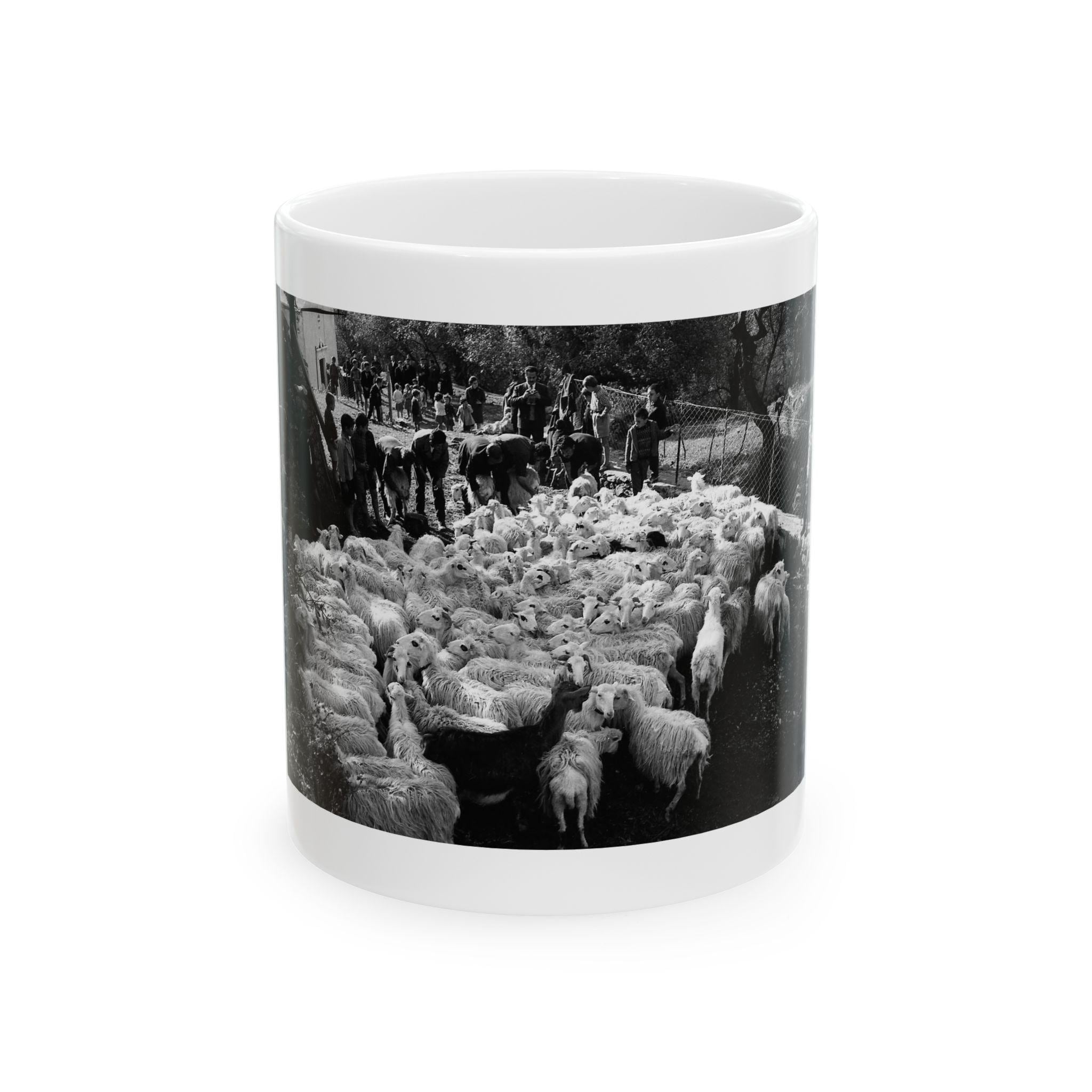
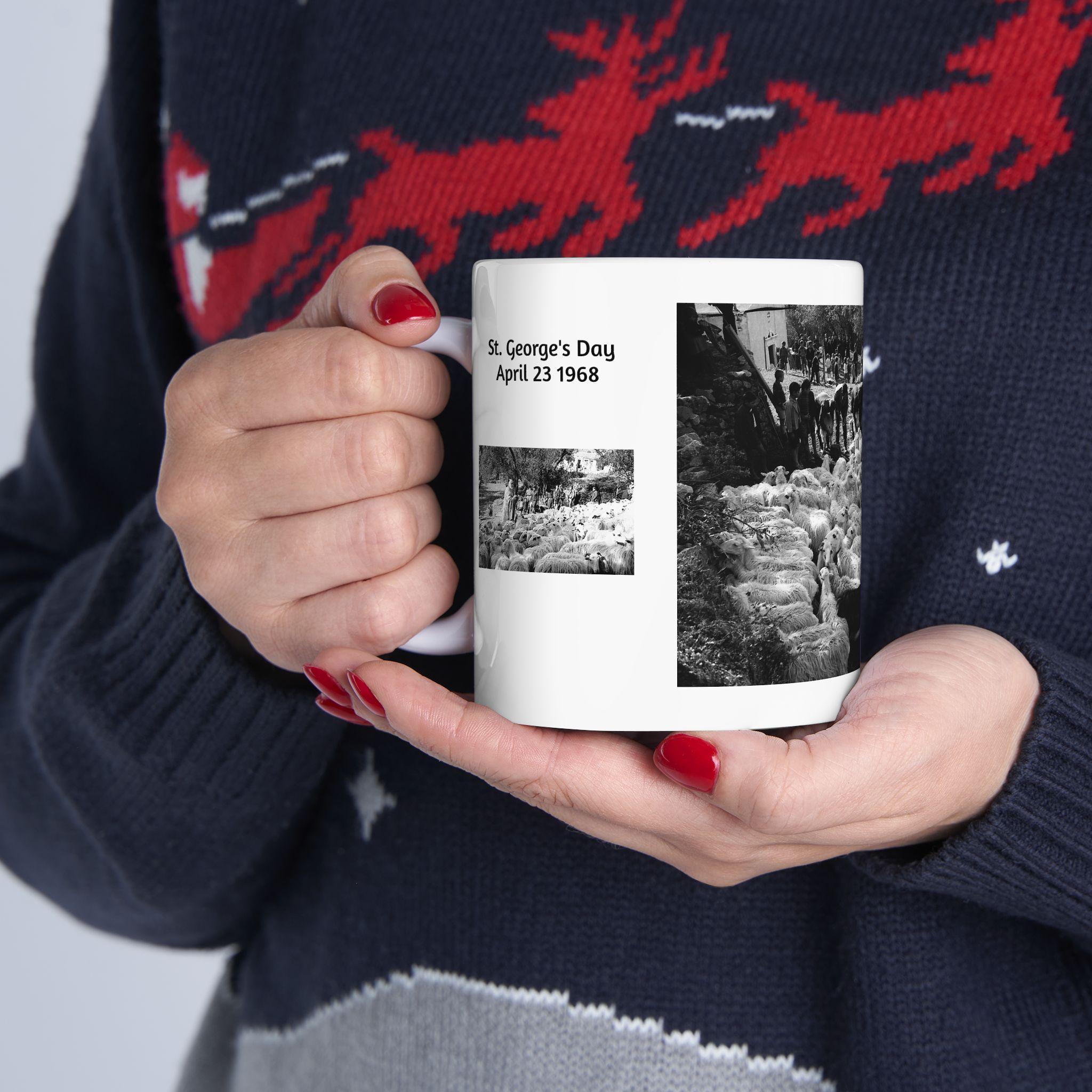

Asi Gonia St. George's Day April 23 1968 A very famous Festival
AU$ 10.99

Bring a piece of Greek history to your morning routine with this Asi Gonia 1968
ceramic photo mug — a heartfelt keepsake for anyone with roots in Crete or a love of vintage Greece. Whether you're buying for yourself or gifting to someone proud of their Greek heritage, this ceramic coffee cup makes an unforgettable present. The photo captures Asi Gonia village as it looked in 1968 — a rare, nostalgic snapshot in time printed on a quality ceramic mug. ☕ Perfect for: — Greek diaspora families — Crete travel lovers — History and heritage collectors — Unique birthday or Christmas gifts for him or herSt. George’s Day Twenty-third of April and the third of November There are two St. George’s days in Asi Gonia: November 3 and April 23, marking the beginning and end of winter. They are the largest male-oriented festivals of the village. November the third marks the end of the period of plenty so everyone indulges themselves, eating large quantities of mutton. Men drink so much that it is known as St. George the Drunkard’s day. Held at a watering place known as potistiri, George Psychoundakis describes it this way: The first wine of the year has to be taken to him on the third of November for him to bless and to ensure that the remaining wine does not spoil. So much wine is consumed it is known as St. George the drunkard’s day. The church is set in a very beautiful spot near to an underground spring, so that the surrounding plane trees are more than twice their usual size. It is forbidden to leaves hang low, the sheep and goats do not eat them. Herders bring cooked ram and goats as well as wine to the festival (panigiria). Each herder has in his flock an animal dedicated to the Saint. The animal gets promised to the Church when some misfortune or illness affects the flock or the herder’s family and it must be slain when it reaches five years old. One man thought he would deceive the Saint because his votive ram was nicely fattened and he thought it was too good for the church, but when he took the meat of another ram to church, his fat ram—previously healthy—came down the mountain voluntarily and died inside the church (1962: 122). At dawn on April 23, the major Asi Goniot festival, and one of the most well-attended on the island, herders bring their sheep down from the mountains to the small church of St. George in Pateriana, keeping their flocks in separate groups until villagers and visitors assemble. In a field above the church the priest blesses each flock with holy water before a mass milking ceremony. The shepherds bow their heads to kiss the cross, crossing themselves as the priest crosses their foreheads with a wet sprig of basil. St. George’s day is an important charitable occasion. Villagers must give milk first to poor families to please the saint. As with women, men’s religious behaviour correlates highly with their social and productive activities. For Asi Goniots raised on stories of revolution against the Turkish infidel, the central figure of St. George symbolizes their heroic defence of the island against centuries of invasion and colonization. There is also in the imagery a resonance with cultural codes and defence of maidenly virtue, for in Rizitik songs Crete is often compared with a castle or a maiden whose honour is at stake. It is said that St. George is the most important martyr for the Orthodox faith, known as defender of the poor and physician to the sick. St. George is not only a warrior saint but also tiller of the soil: the cross he carries for Christ is a symbol of the plough, fertility and resurrection. He represents the peasant tied to the land and cares of the house, as well as the warrior without family responsibilities concerned only with protection and liberation. He is depicted on icons riding a white horse saving a maiden from a devil dragon. The horse represents God’s grace carrying him to martyrdom; the maiden symbolizes the Holy Mother Church.Product features - Microwave-safe for convenient reheating - Dishwasher-safe for easy cleaning - Vibrant, crisp photo printing on glossy ceramic - Available in 11 oz and 15 oz sizes with comfortable C-handle - Lead- and BPA-free, durable white ceramicCare instructions - Clean in dishwasher or wash by hand with warm water and dish soap
ceramic photo mug — a heartfelt keepsake for anyone with roots in Crete or a love of vintage Greece. Whether you're buying for yourself or gifting to someone proud of their Greek heritage, this ceramic coffee cup makes an unforgettable present. The photo captures Asi Gonia village as it looked in 1968 — a rare, nostalgic snapshot in time printed on a quality ceramic mug. ☕ Perfect for: — Greek diaspora families — Crete travel lovers — History and heritage collectors — Unique birthday or Christmas gifts for him or herSt. George’s Day Twenty-third of April and the third of November There are two St. George’s days in Asi Gonia: November 3 and April 23, marking the beginning and end of winter. They are the largest male-oriented festivals of the village. November the third marks the end of the period of plenty so everyone indulges themselves, eating large quantities of mutton. Men drink so much that it is known as St. George the Drunkard’s day. Held at a watering place known as potistiri, George Psychoundakis describes it this way: The first wine of the year has to be taken to him on the third of November for him to bless and to ensure that the remaining wine does not spoil. So much wine is consumed it is known as St. George the drunkard’s day. The church is set in a very beautiful spot near to an underground spring, so that the surrounding plane trees are more than twice their usual size. It is forbidden to leaves hang low, the sheep and goats do not eat them. Herders bring cooked ram and goats as well as wine to the festival (panigiria). Each herder has in his flock an animal dedicated to the Saint. The animal gets promised to the Church when some misfortune or illness affects the flock or the herder’s family and it must be slain when it reaches five years old. One man thought he would deceive the Saint because his votive ram was nicely fattened and he thought it was too good for the church, but when he took the meat of another ram to church, his fat ram—previously healthy—came down the mountain voluntarily and died inside the church (1962: 122). At dawn on April 23, the major Asi Goniot festival, and one of the most well-attended on the island, herders bring their sheep down from the mountains to the small church of St. George in Pateriana, keeping their flocks in separate groups until villagers and visitors assemble. In a field above the church the priest blesses each flock with holy water before a mass milking ceremony. The shepherds bow their heads to kiss the cross, crossing themselves as the priest crosses their foreheads with a wet sprig of basil. St. George’s day is an important charitable occasion. Villagers must give milk first to poor families to please the saint. As with women, men’s religious behaviour correlates highly with their social and productive activities. For Asi Goniots raised on stories of revolution against the Turkish infidel, the central figure of St. George symbolizes their heroic defence of the island against centuries of invasion and colonization. There is also in the imagery a resonance with cultural codes and defence of maidenly virtue, for in Rizitik songs Crete is often compared with a castle or a maiden whose honour is at stake. It is said that St. George is the most important martyr for the Orthodox faith, known as defender of the poor and physician to the sick. St. George is not only a warrior saint but also tiller of the soil: the cross he carries for Christ is a symbol of the plough, fertility and resurrection. He represents the peasant tied to the land and cares of the house, as well as the warrior without family responsibilities concerned only with protection and liberation. He is depicted on icons riding a white horse saving a maiden from a devil dragon. The horse represents God’s grace carrying him to martyrdom; the maiden symbolizes the Holy Mother Church.Product features - Microwave-safe for convenient reheating - Dishwasher-safe for easy cleaning - Vibrant, crisp photo printing on glossy ceramic - Available in 11 oz and 15 oz sizes with comfortable C-handle - Lead- and BPA-free, durable white ceramicCare instructions - Clean in dishwasher or wash by hand with warm water and dish soap