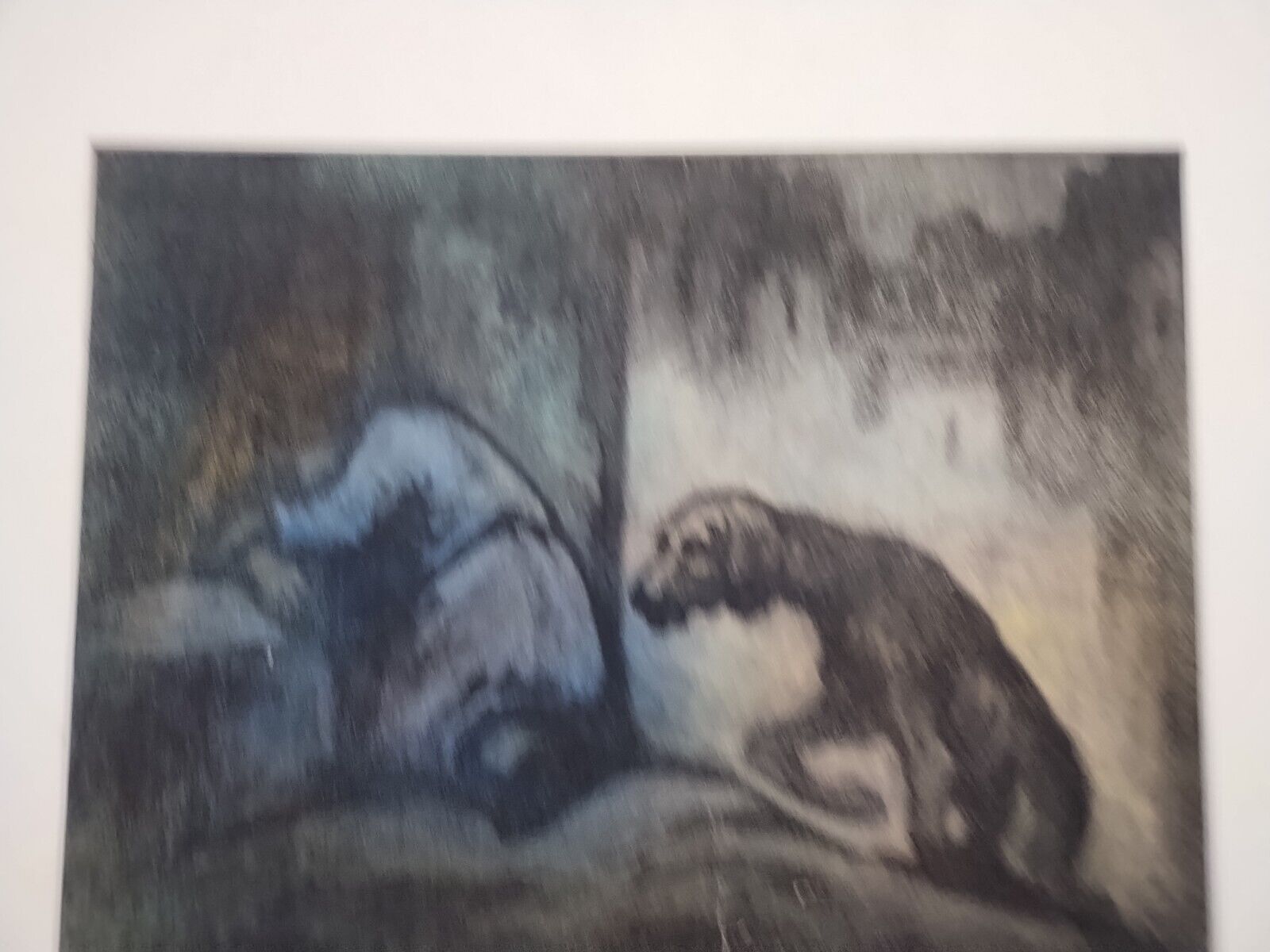
Eugene Higgins 1874 1958 NY Kansas WPA 10.75x 14.75 view Painting Pastel Dog Man
$ 795.00


Up for consideration is a vintage hand painted and colored pastel art work
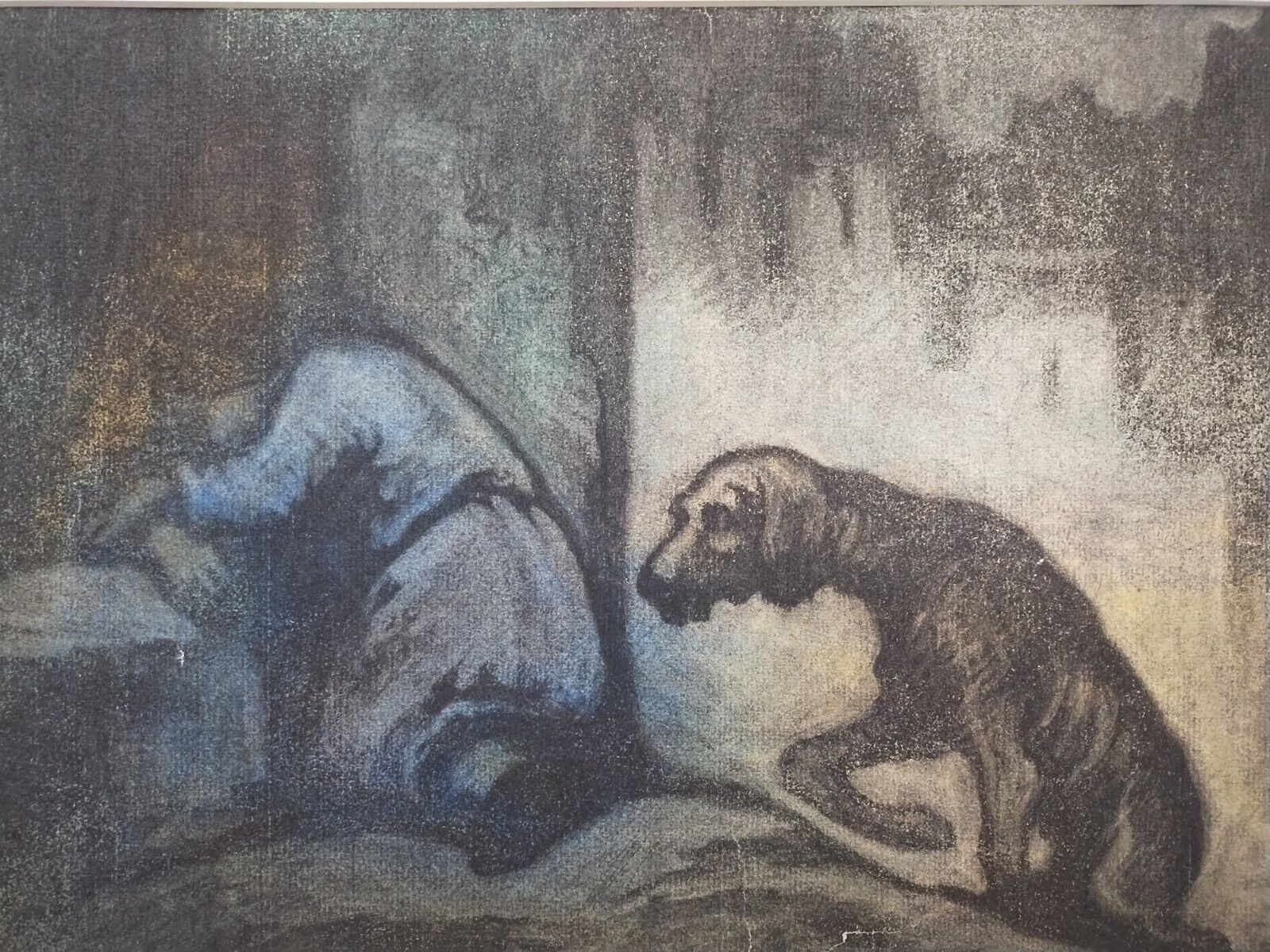
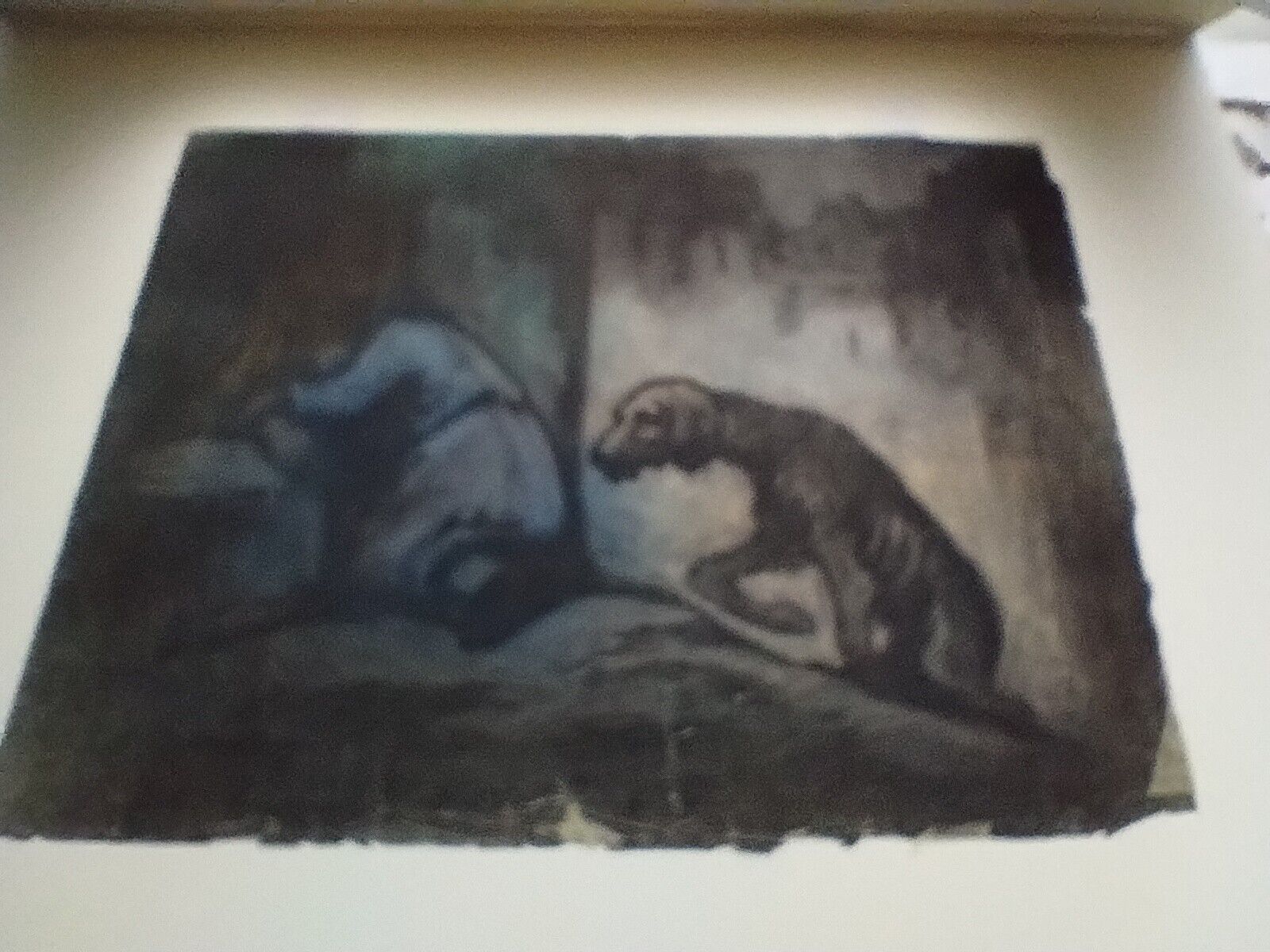
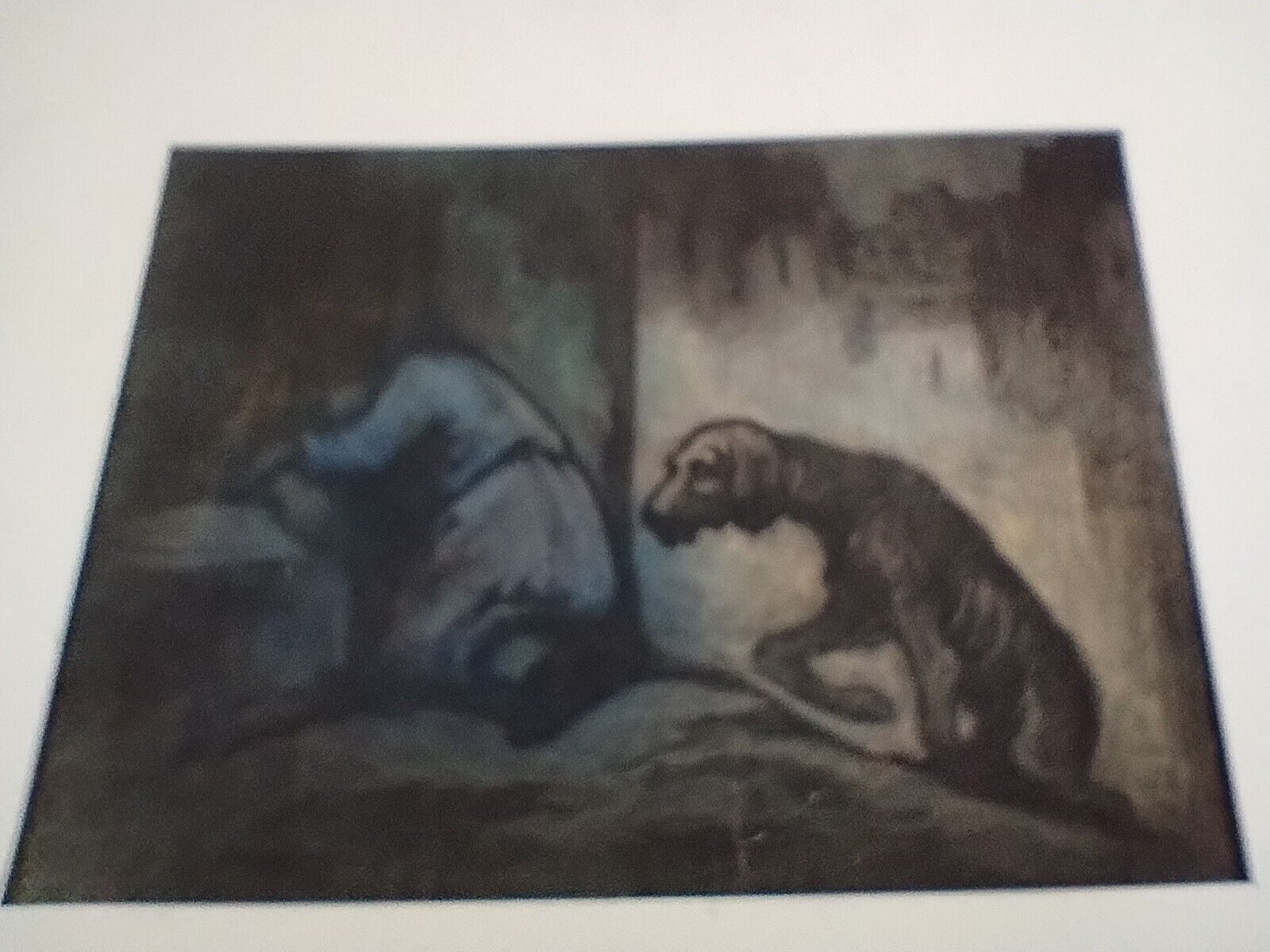
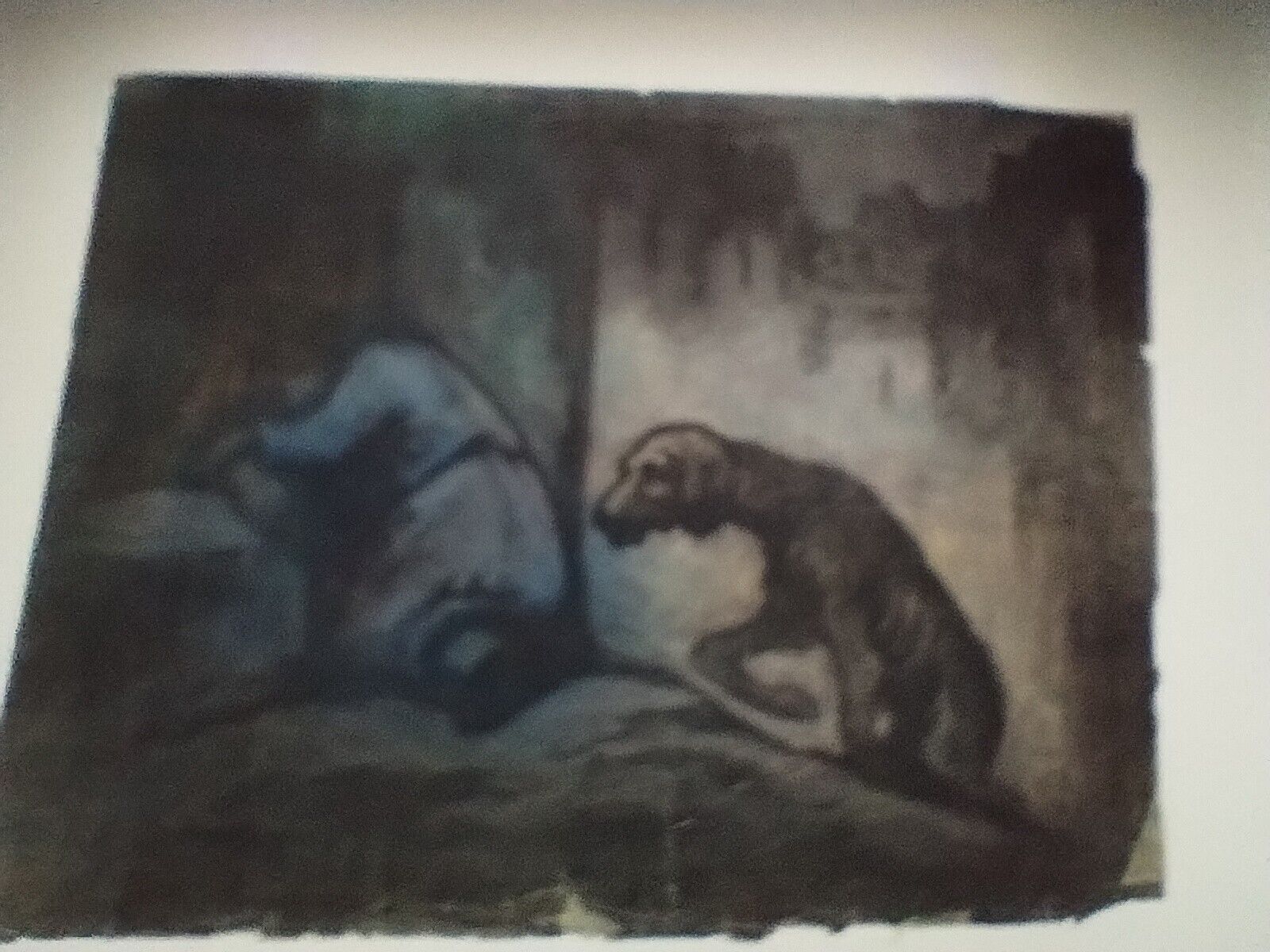
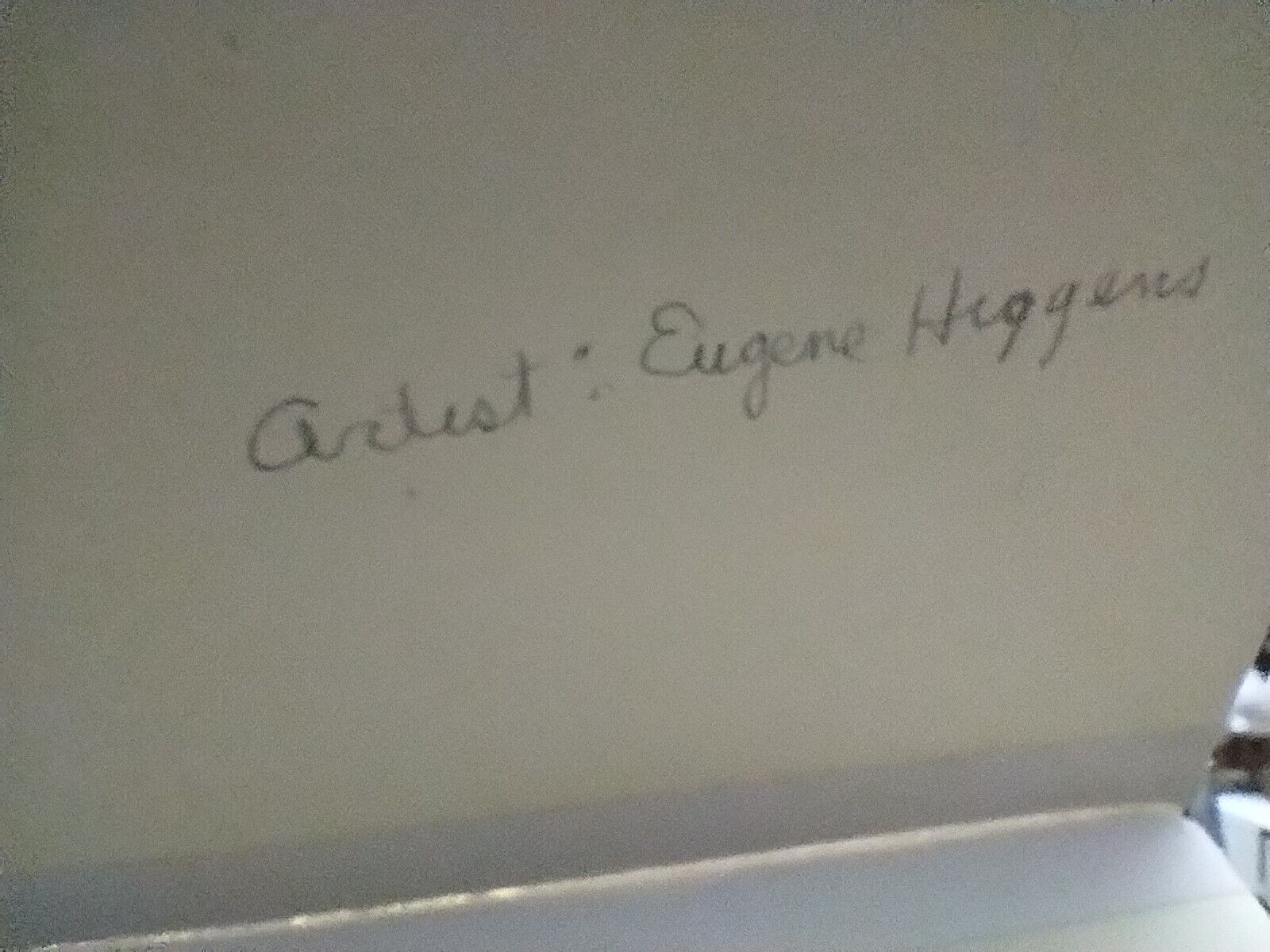
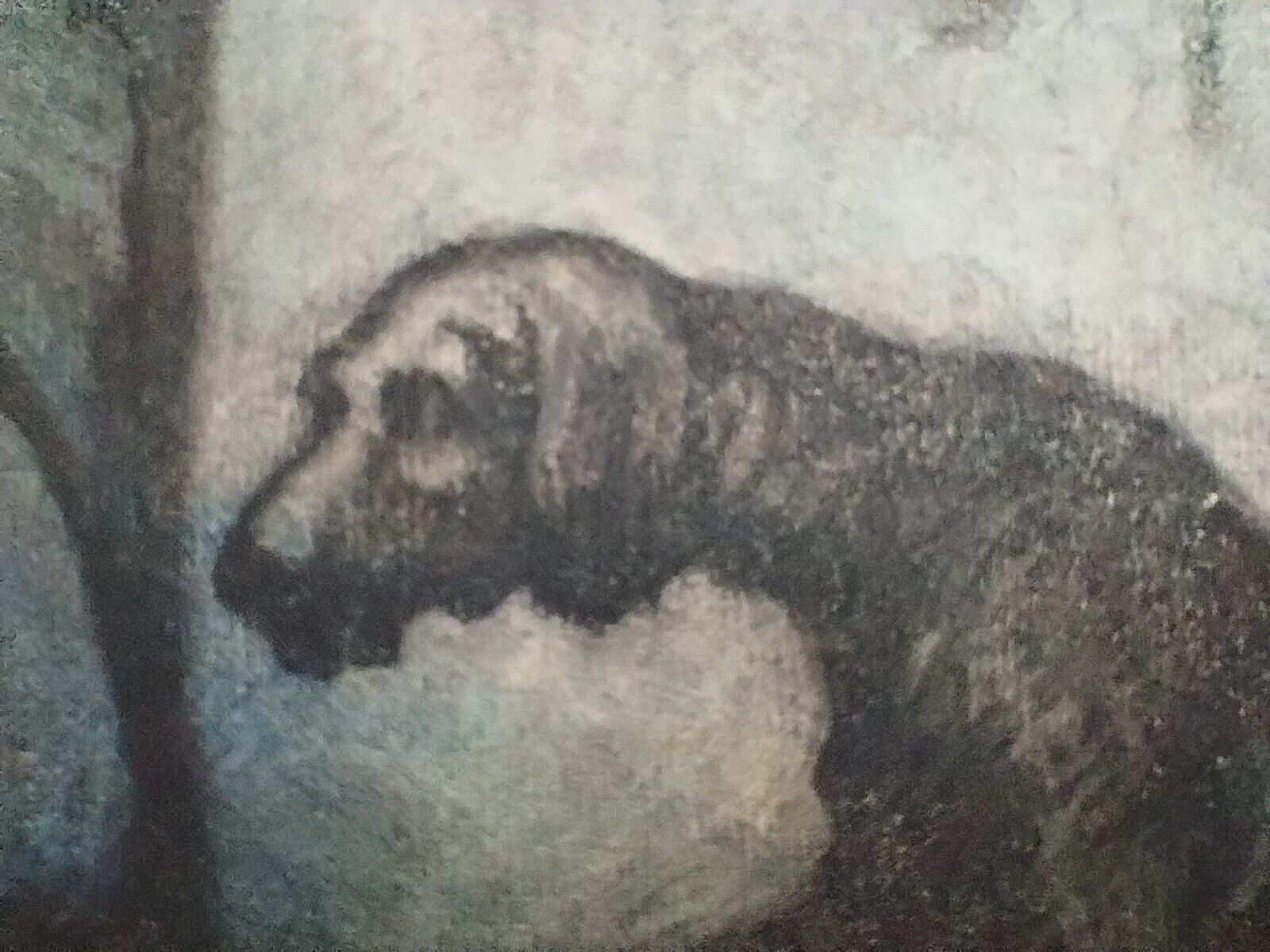
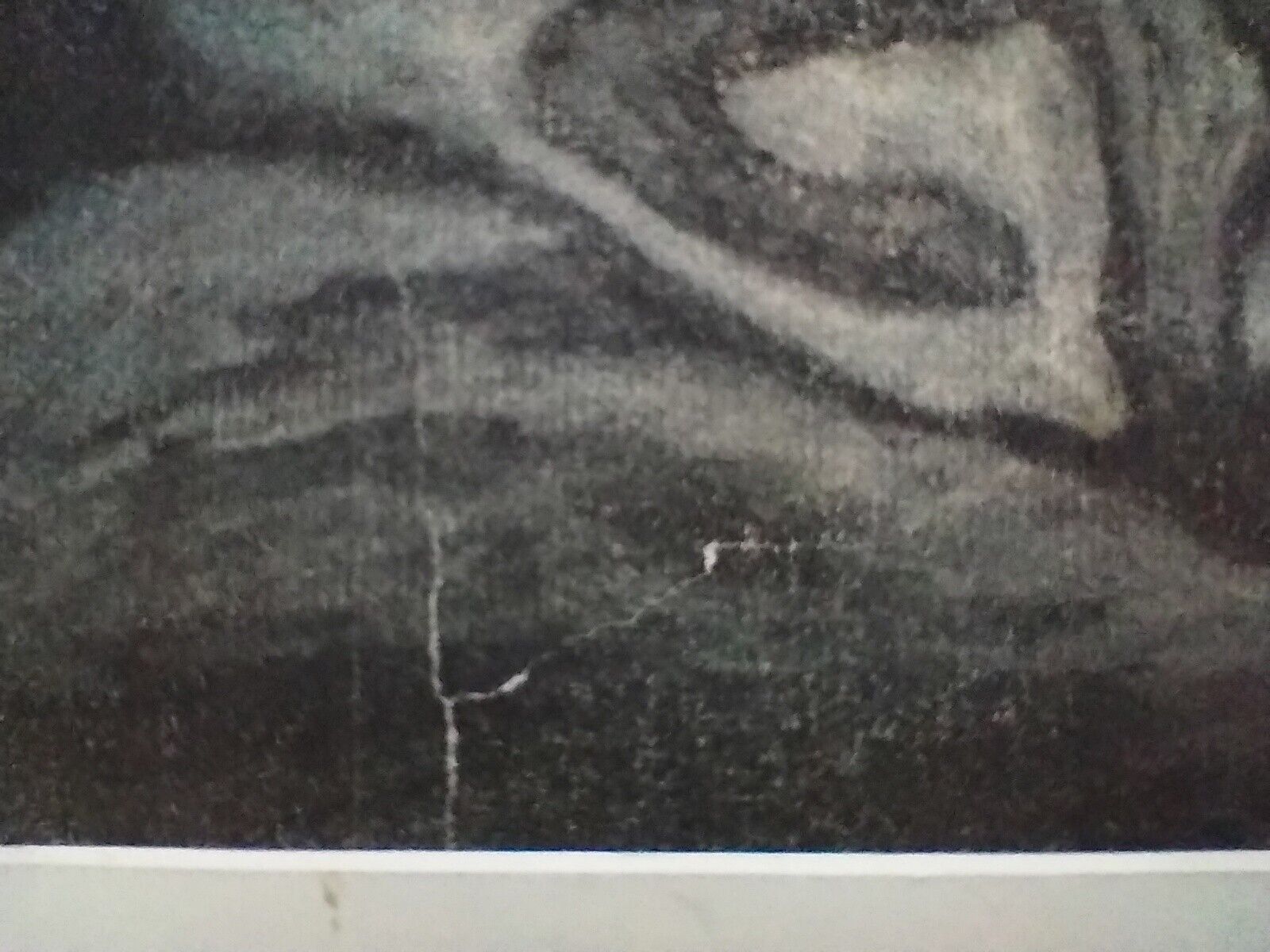
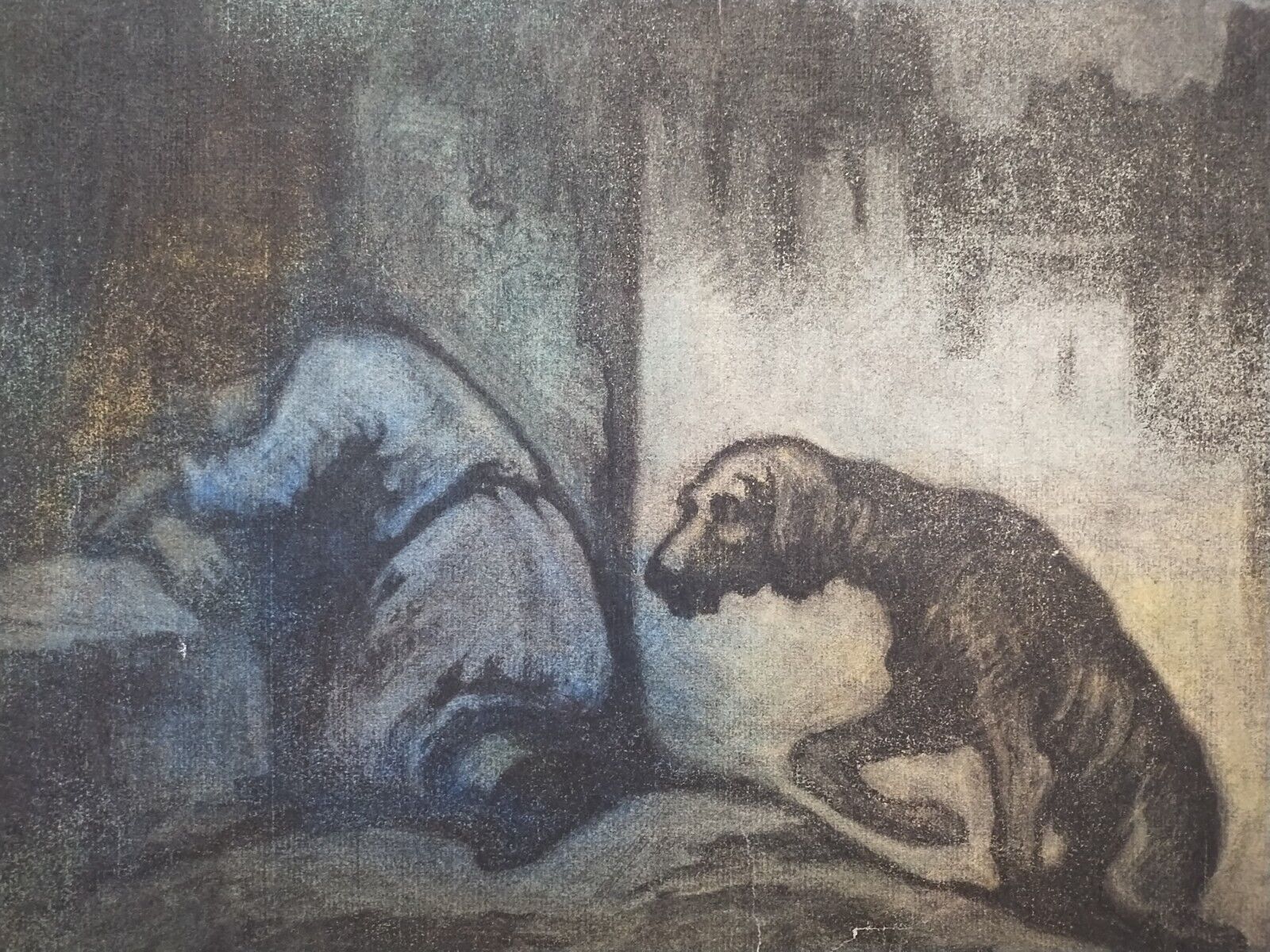
by listed Kansas NY Artist Eugene Higgins (1874-1958). The work of art is done artist paper and has been conserved and affixed to artists acid free backing. It has a hinged matting that folds over the work limiting the view to only the rectangled opening. The scene like many of his works are of the desperate poor and downtrodden...in somewhat of an idealized situation...meaning it is a situation created by the artist to convey meaning as opposed to an actual live sitting models. The scene depicts a desperately thing undernourished dog on his last legs in fact he is crawling on his forearms as 1 couple are in the corner suffering in anguish. It is difficult to see as the the fellow in is a medium blue robe talking and holding on to a person in a burgundy robe it looks like a dire situation. Anyways please see the photos as part of the description. If you have any questions or something to share please message me. Buyer pays shipping. Provenance: Private Collection, Western Michigan. The painting was in a very interesting private collection in Western Michigan...We bought it all !!! I mean the collection runs the gammet so stay tuned for some real exciting stuff from Coast to Coast and right from the bottom to the top culminating in works from New Hope Colony, Bucks County PA. Biography: Eugene Higgins, a painter and etcher, represented with sentimentality the impact of the homeless, depressed and less fortunate people of society. His passionate sympathy for the poor led him to generalize situation and location, painting archetypal situations rather than observed ones.Although a Social Realist in subject matter, his style was European, much influenced by Honore Daumier, and this Old World quality made his work less popular than that of others such as Robert Henri, who had a more unique style.Higgins was born the son of an Irish stonecutter and builder in Kansas City, Missouri, 1874, and after the death of his mother, his father moved him as a youngster to Saint Louis, where he was raised. He briefly attended night classes at the St. Louis School of Fine Arts, and also went to work in an architect's office.In 1897, he went to Paris and studied at the Ecole des Beaux-Arts and the Academie Julian, under Jean Paul Laurens, Benjamin Constant and Jean Leon Gerome. In France, he developed the skill of etching, which became his primary way of earning money.In 1904, he returned to America, spending a year in St. Louis and then settling in New York City. In the early 1920s, he married Anita Rio, and for the remainder of his life, kept a studio on West 22nd Street. Anita and Eugene spent most of their summers at Old Lyme, Connecticut.Recognition came for Higgins, both for his etching and for his painting, which for some viewers carried the suggestion of sculpture because of the vigor and overwhelming qualities of his figure painting. In 1904, the militant Journal of Social Satire in Art, devoted an entire issue to Higgins' s illustration titled Les Paurves. He was acclaimed by the poet Edward Markham as "the one powerful painter of the tragic lacks and losses." In 1921, Higgins was voted to membership in the National Academy of Design, and participated in every exhibition after that to 1950.Higgins credited his father's influence as being very strong on his work because his father was a stonecutter, whom the young Higgins helped and observed the way he handled the materials. His father talked much about the skills of Michelangelo, and about this Higgins said: "As I remember those days it seems to me I knew Michelangeo as well as a I knew my father---we three were pals together. " he other major influence was Jean Millet from whom he "learned also the beauty of simple elemental conditions truthfully portrayed." (271)During the Depression era Higgins created murals including for post offices in Beaver Falls, Pennsylvania; Shawano, Wisconsin; and Mount Pleasant Tennessee.In 1958 Eugene Higgins died in a hospital in New York after a long illness.Source: Ruth Pasquine, Paintings and Sculpture in the Collection of the National Academy of Design, Volume One, 1826-1925, David Dearinger, Editor.Best Regards,JohnnyJohnnyCrystal Est. 1987
by listed Kansas NY Artist Eugene Higgins (1874-1958). The work of art is done artist paper and has been conserved and affixed to artists acid free backing. It has a hinged matting that folds over the work limiting the view to only the rectangled opening. The scene like many of his works are of the desperate poor and downtrodden...in somewhat of an idealized situation...meaning it is a situation created by the artist to convey meaning as opposed to an actual live sitting models. The scene depicts a desperately thing undernourished dog on his last legs in fact he is crawling on his forearms as 1 couple are in the corner suffering in anguish. It is difficult to see as the the fellow in is a medium blue robe talking and holding on to a person in a burgundy robe it looks like a dire situation. Anyways please see the photos as part of the description. If you have any questions or something to share please message me. Buyer pays shipping. Provenance: Private Collection, Western Michigan. The painting was in a very interesting private collection in Western Michigan...We bought it all !!! I mean the collection runs the gammet so stay tuned for some real exciting stuff from Coast to Coast and right from the bottom to the top culminating in works from New Hope Colony, Bucks County PA. Biography: Eugene Higgins, a painter and etcher, represented with sentimentality the impact of the homeless, depressed and less fortunate people of society. His passionate sympathy for the poor led him to generalize situation and location, painting archetypal situations rather than observed ones.Although a Social Realist in subject matter, his style was European, much influenced by Honore Daumier, and this Old World quality made his work less popular than that of others such as Robert Henri, who had a more unique style.Higgins was born the son of an Irish stonecutter and builder in Kansas City, Missouri, 1874, and after the death of his mother, his father moved him as a youngster to Saint Louis, where he was raised. He briefly attended night classes at the St. Louis School of Fine Arts, and also went to work in an architect's office.In 1897, he went to Paris and studied at the Ecole des Beaux-Arts and the Academie Julian, under Jean Paul Laurens, Benjamin Constant and Jean Leon Gerome. In France, he developed the skill of etching, which became his primary way of earning money.In 1904, he returned to America, spending a year in St. Louis and then settling in New York City. In the early 1920s, he married Anita Rio, and for the remainder of his life, kept a studio on West 22nd Street. Anita and Eugene spent most of their summers at Old Lyme, Connecticut.Recognition came for Higgins, both for his etching and for his painting, which for some viewers carried the suggestion of sculpture because of the vigor and overwhelming qualities of his figure painting. In 1904, the militant Journal of Social Satire in Art, devoted an entire issue to Higgins' s illustration titled Les Paurves. He was acclaimed by the poet Edward Markham as "the one powerful painter of the tragic lacks and losses." In 1921, Higgins was voted to membership in the National Academy of Design, and participated in every exhibition after that to 1950.Higgins credited his father's influence as being very strong on his work because his father was a stonecutter, whom the young Higgins helped and observed the way he handled the materials. His father talked much about the skills of Michelangelo, and about this Higgins said: "As I remember those days it seems to me I knew Michelangeo as well as a I knew my father---we three were pals together. " he other major influence was Jean Millet from whom he "learned also the beauty of simple elemental conditions truthfully portrayed." (271)During the Depression era Higgins created murals including for post offices in Beaver Falls, Pennsylvania; Shawano, Wisconsin; and Mount Pleasant Tennessee.In 1958 Eugene Higgins died in a hospital in New York after a long illness.Source: Ruth Pasquine, Paintings and Sculpture in the Collection of the National Academy of Design, Volume One, 1826-1925, David Dearinger, Editor.Best Regards,JohnnyJohnnyCrystal Est. 1987