Vintage Asi Gonia Festival Photo | Framed Black and White Paper Poster
AU$ 119.67

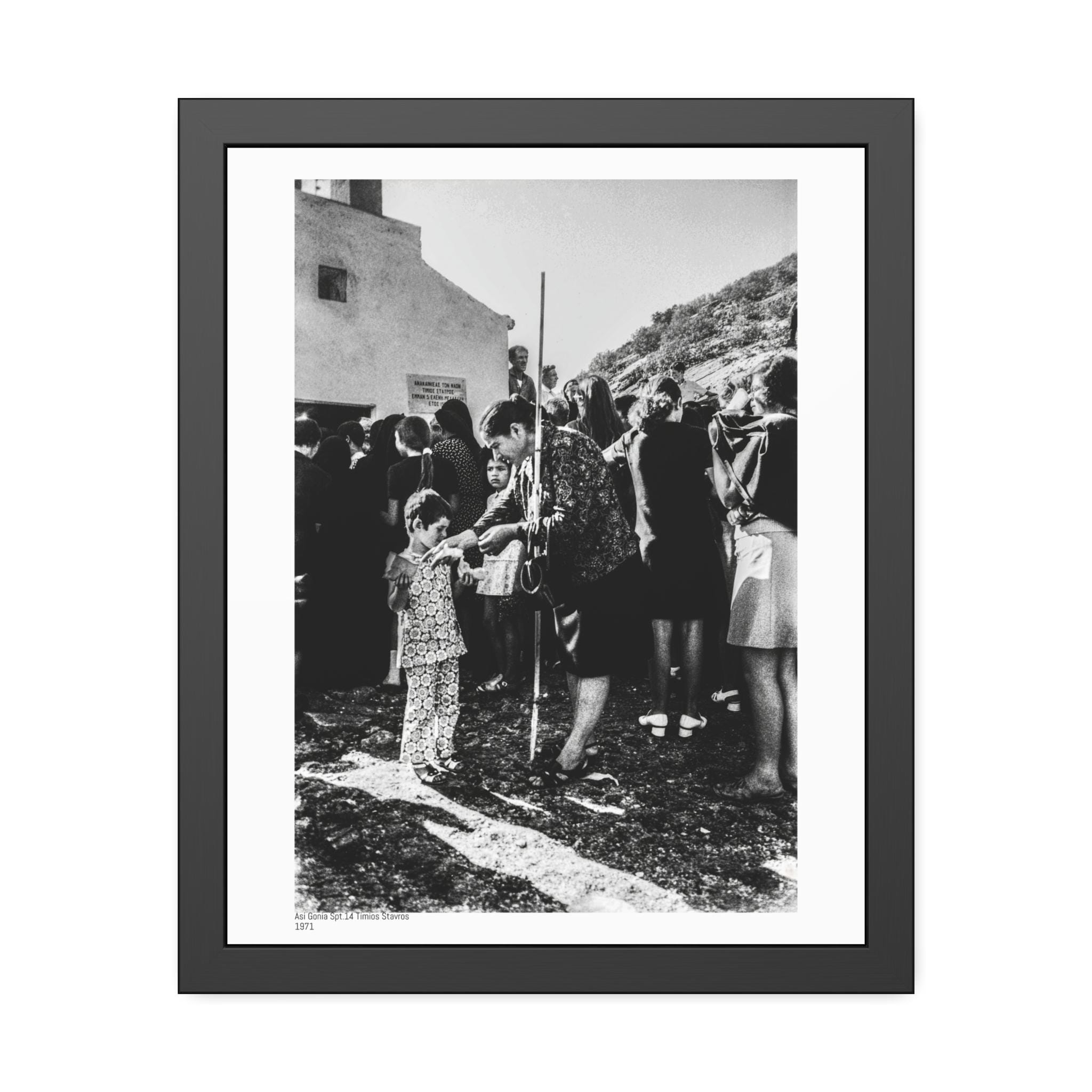
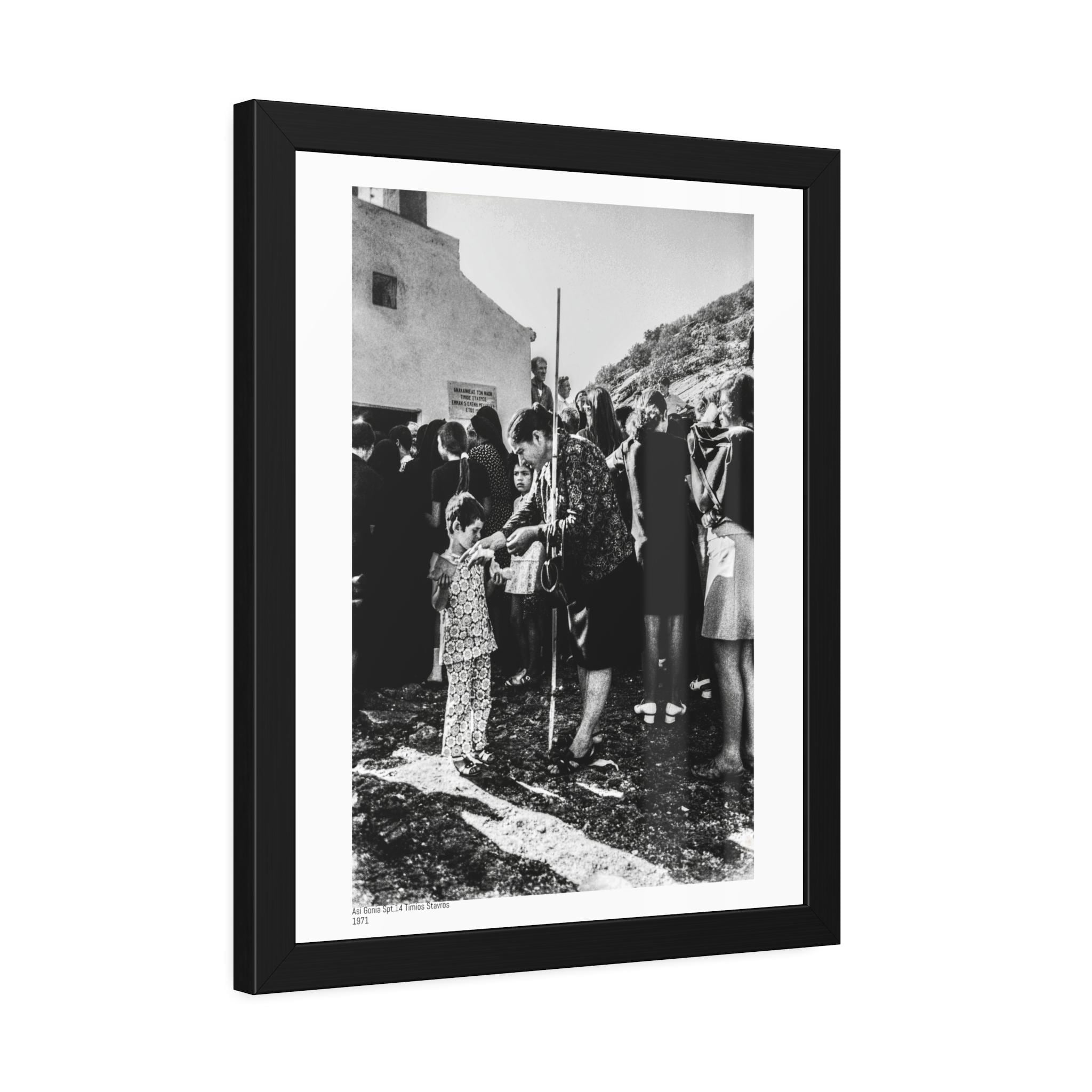
1971 Warriors And Maidens Timios Stavros Festival of the Holy Cross fourteenth
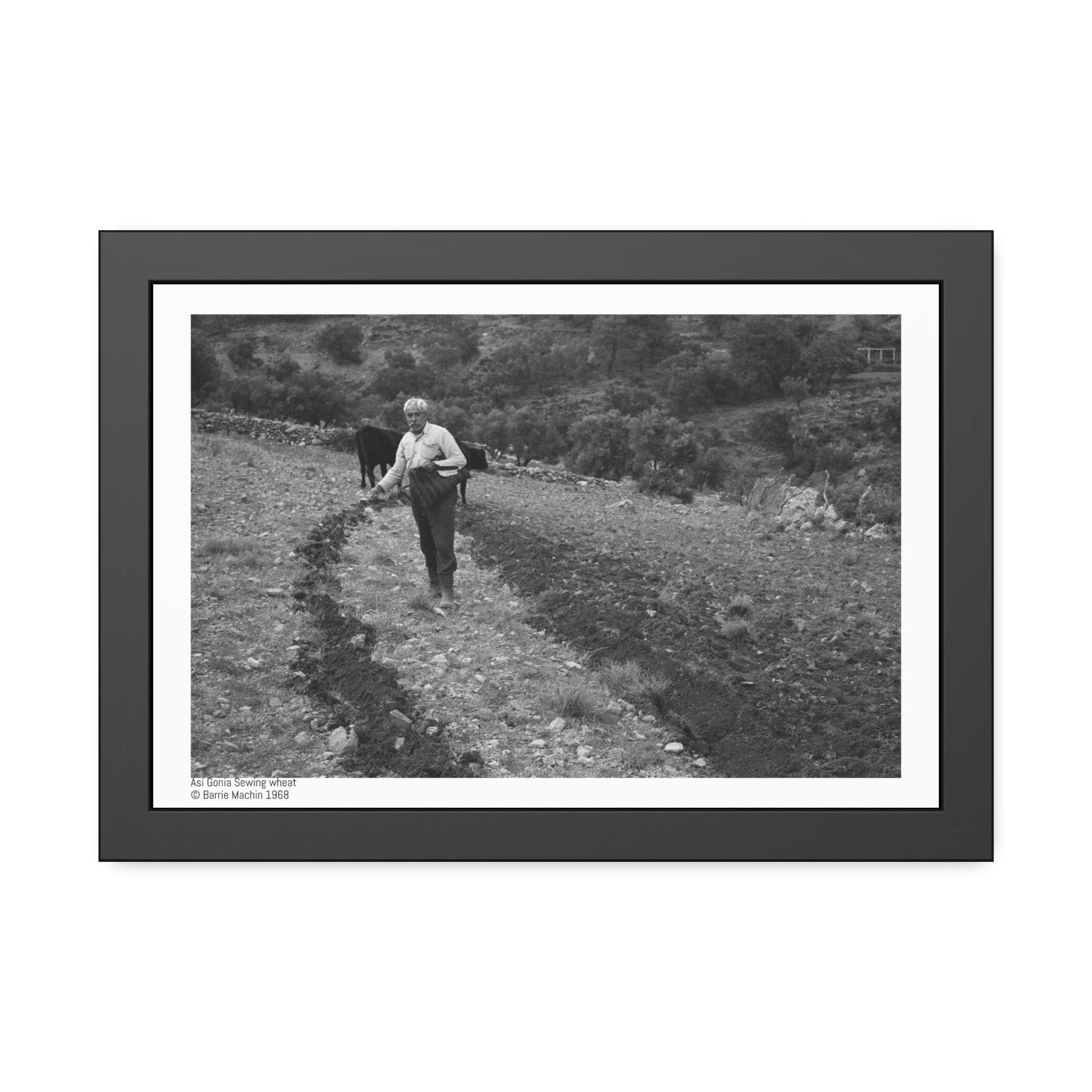
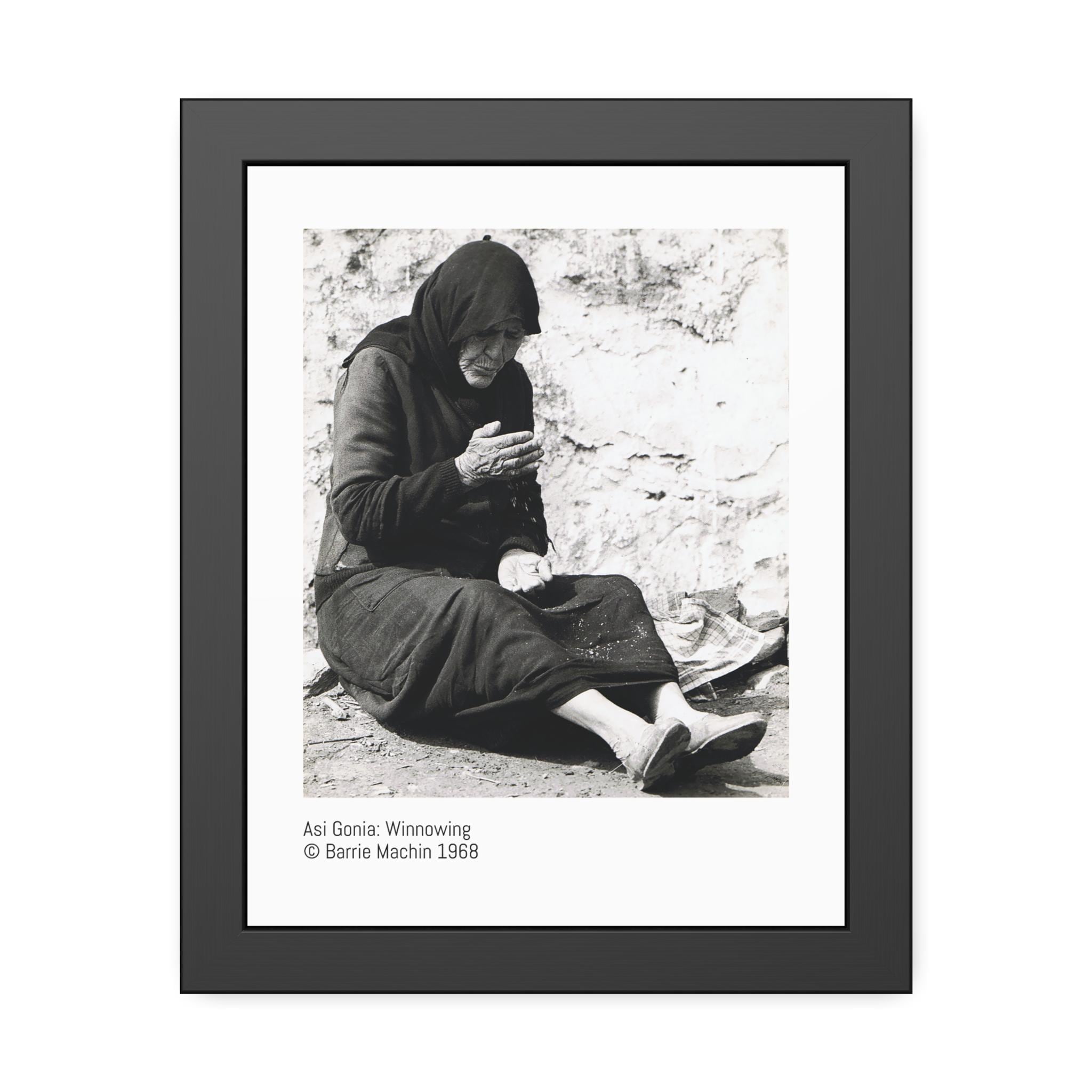
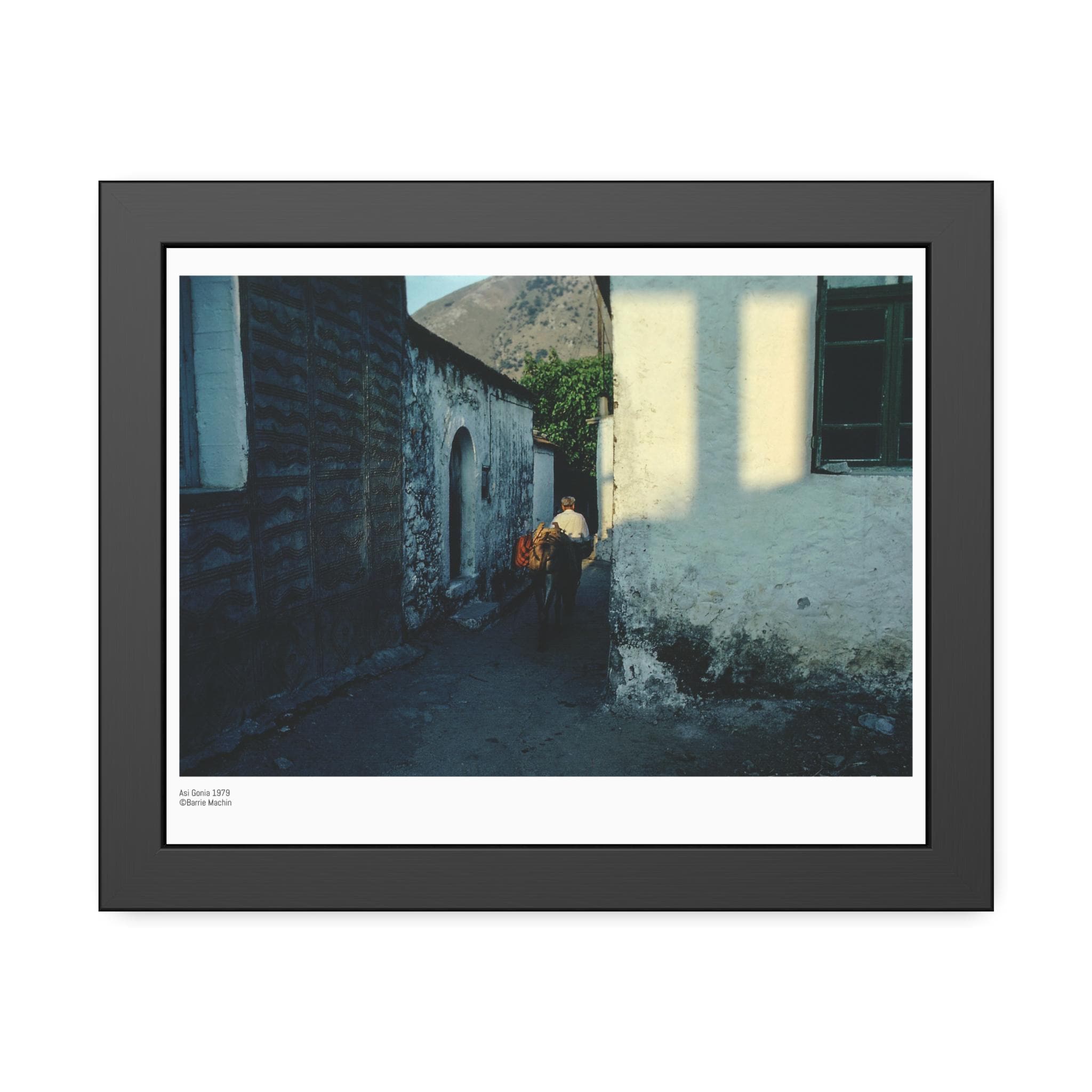
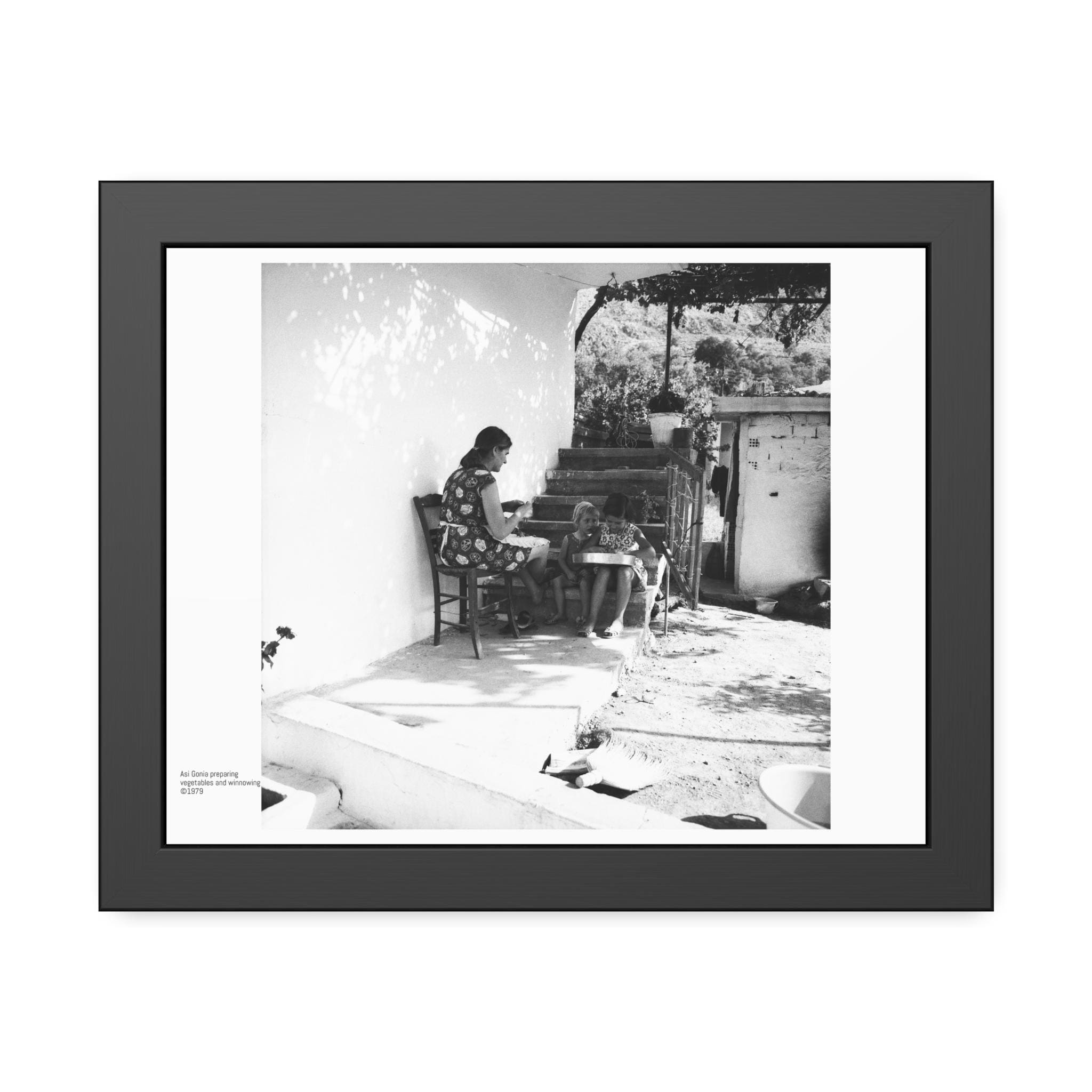
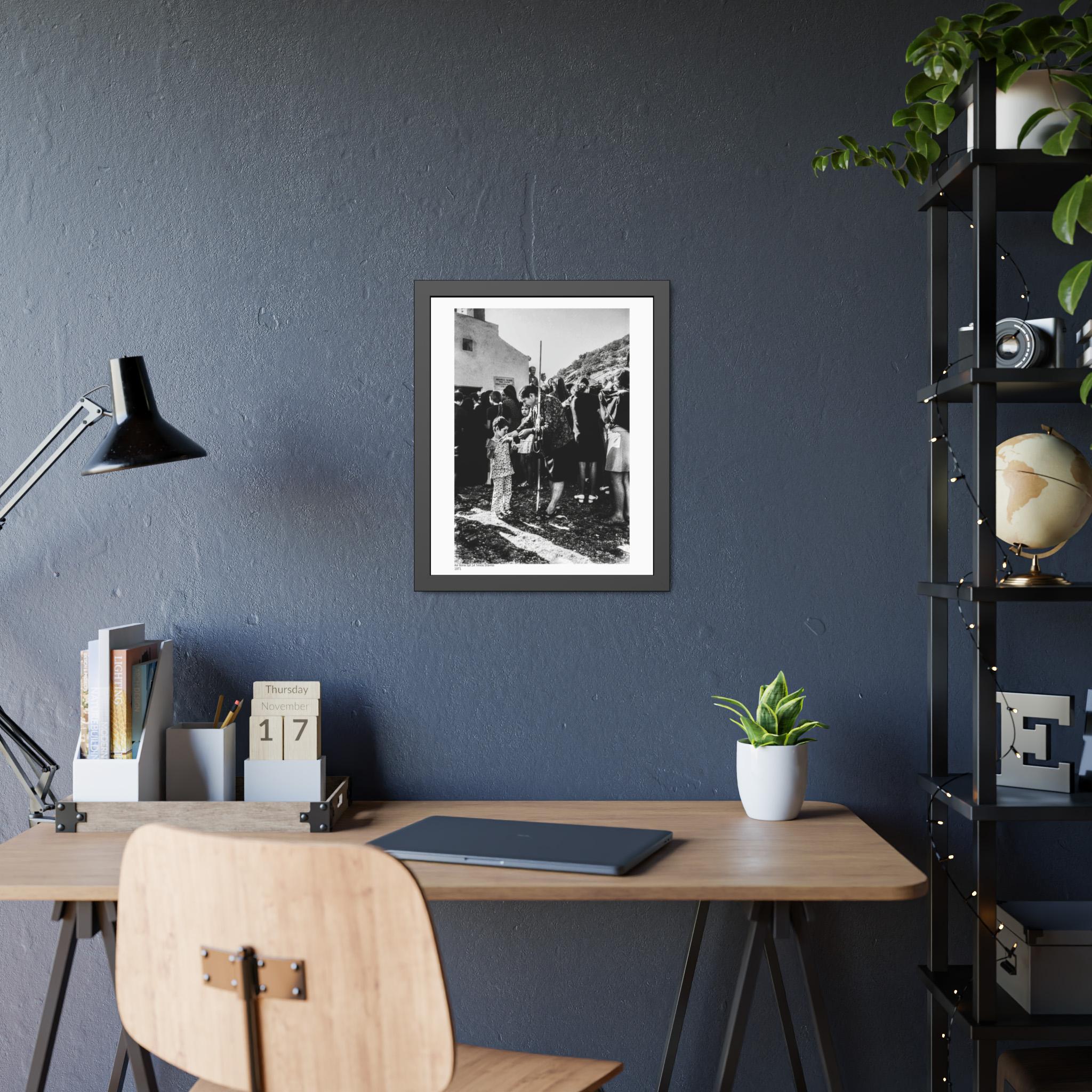
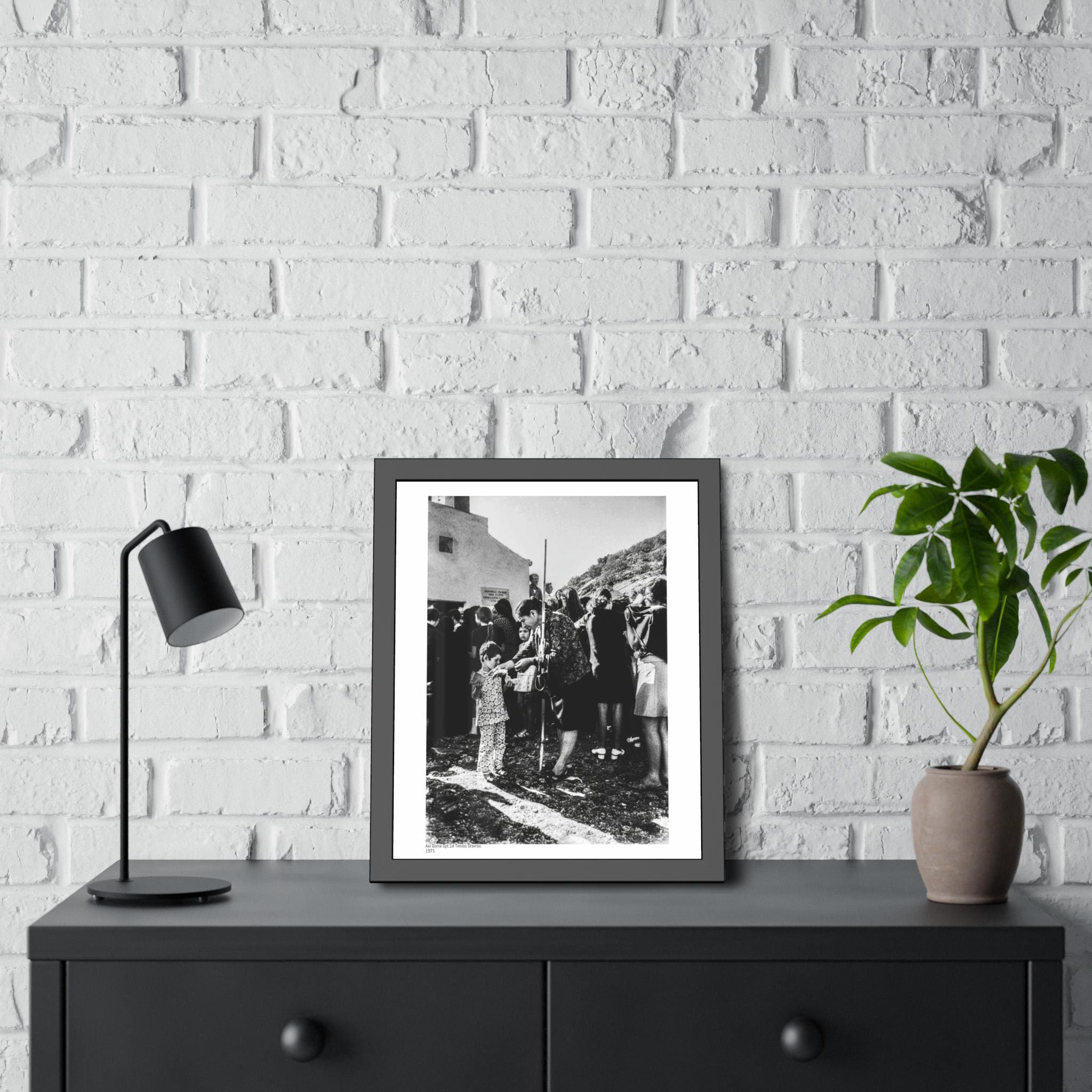
of september In Asi Gonia the protective power of the Holy Cross is celebrated on September 14. Miracles of the Cross prove to Asi Goniaots the existence of God and the efficacy of their religious practices. The small white church of the Holy Cross (Timios Stavros) stands on the mountains high above Asi Gonia where it can be seen by several other villages. A shepherd is supposed to have found the cross on a rock and brought it down to the village priest, Markos. The cross disappeared from his keeping and reappeared in the same place. The priest locked the cross up in a chest, but next morning it reappeared on the mountain. The priest saw this as a sign to build a church. Miracles continued to occur when building the church, villagers hewed each stone separately, and put them in place, until only the lintel remained. When they returned to work in the morning they found the keystone in its place. During the German occupation the cross was found once more on the rock outside the church and the village was spared destruction. During the insurrections against the Turks villagers say that an army was sent to destroy them. Getting wind of this, women and children fled to the caves above the village and men waited in ambush. The Turks came from an unexpected direction and threatened to destroy everyone. In answer to the villagers’ prayers a fog descended and St. George appeared, spear in hand, to defend them. At the festival of the Holy Cross on September 14, villagers bring seeds for priestly blessing. The Cross is a symbol both of the eternal fertility of the earth and immortality. In this service the significance of parthenogenesis is explicit: O Mother of God, you became a mystical paradise when, without tilling, you ploughed forth Christ our God by whom the life-giving tree of the Cross was planted here on Earth.The imagery of Orthodox iconography and the Orthodox service sanctions the position of women which is reflected in the physical arrangements in church. The matte black pinewood frame and crisp white mat lend a gallery-ready presence to the black-and-white photograph, while the choice of fine art or semi-gloss paper keeps the texture true to the image’s character — delicate tooth for a classic print or a bright satin finish for strong contrast. It arrives ready to hang with pre-installed hardware and rubber bumpers, so the piece sits square and protected behind shatter-proof plexiglass. Choose orientation and size to anchor a hallway, living room vignette, or study wall with a piece that reads like a memory captured on the page.Product features - Two paper options: fine art (310 gsm) or semi-gloss (260 gsm) - Matte black 100% pinewood frame with brown paper backing - Shatter-proof plexiglass cover - Pre-installed hanging hardware and wall-protecting rubber bumpers - Available in 10 sizes with horizontal and vertical orientationsCare instructions - Clean framed prints with a slightly wet cloth when necessary.
of september In Asi Gonia the protective power of the Holy Cross is celebrated on September 14. Miracles of the Cross prove to Asi Goniaots the existence of God and the efficacy of their religious practices. The small white church of the Holy Cross (Timios Stavros) stands on the mountains high above Asi Gonia where it can be seen by several other villages. A shepherd is supposed to have found the cross on a rock and brought it down to the village priest, Markos. The cross disappeared from his keeping and reappeared in the same place. The priest locked the cross up in a chest, but next morning it reappeared on the mountain. The priest saw this as a sign to build a church. Miracles continued to occur when building the church, villagers hewed each stone separately, and put them in place, until only the lintel remained. When they returned to work in the morning they found the keystone in its place. During the German occupation the cross was found once more on the rock outside the church and the village was spared destruction. During the insurrections against the Turks villagers say that an army was sent to destroy them. Getting wind of this, women and children fled to the caves above the village and men waited in ambush. The Turks came from an unexpected direction and threatened to destroy everyone. In answer to the villagers’ prayers a fog descended and St. George appeared, spear in hand, to defend them. At the festival of the Holy Cross on September 14, villagers bring seeds for priestly blessing. The Cross is a symbol both of the eternal fertility of the earth and immortality. In this service the significance of parthenogenesis is explicit: O Mother of God, you became a mystical paradise when, without tilling, you ploughed forth Christ our God by whom the life-giving tree of the Cross was planted here on Earth.The imagery of Orthodox iconography and the Orthodox service sanctions the position of women which is reflected in the physical arrangements in church. The matte black pinewood frame and crisp white mat lend a gallery-ready presence to the black-and-white photograph, while the choice of fine art or semi-gloss paper keeps the texture true to the image’s character — delicate tooth for a classic print or a bright satin finish for strong contrast. It arrives ready to hang with pre-installed hardware and rubber bumpers, so the piece sits square and protected behind shatter-proof plexiglass. Choose orientation and size to anchor a hallway, living room vignette, or study wall with a piece that reads like a memory captured on the page.Product features - Two paper options: fine art (310 gsm) or semi-gloss (260 gsm) - Matte black 100% pinewood frame with brown paper backing - Shatter-proof plexiglass cover - Pre-installed hanging hardware and wall-protecting rubber bumpers - Available in 10 sizes with horizontal and vertical orientationsCare instructions - Clean framed prints with a slightly wet cloth when necessary.